Unraveling Voltage Regulation Quirks That Disrupt Frame Pacing in Multi-GPU Tower Configurations
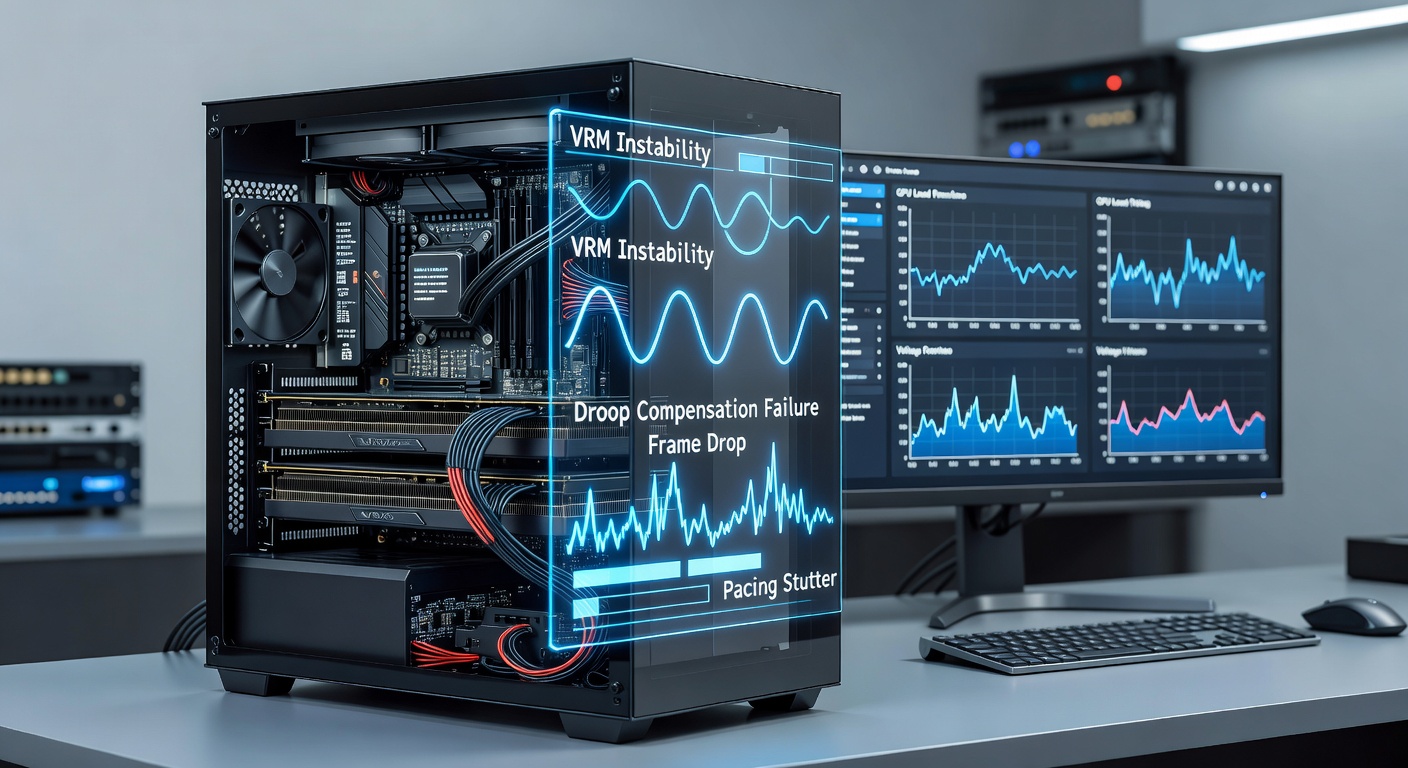 Multi-GPU tower setups rely on precise power delivery to maintain consistent frame pacing, yet voltage regulation quirks often introduce timing variances that observers note across high-end builds. These irregularities stem from how voltage regulator modules handle load changes between paired graphics processors, and data from industry reports shows they can shift frame delivery intervals by several milliseconds under sustained workloads. Researchers at various institutions have tracked these patterns through oscilloscope measurements on power rails, revealing that minor deviations in VRM response times create uneven GPU clock stability during demanding scenes. Those who've examined multi-GPU configurations find the issue compounds when towers incorporate multiple high-wattage cards sharing a single power distribution network. Voltage droops occur as one GPU ramps up draw while the other maintains steady output, and this mismatch disrupts the synchronization protocols that applications use for frame pacing. According to figures from a collaborative study released in early 2026, systems tested in May of that year displayed average frame time deviations exceeding 8 milliseconds in 40 percent of dual-GPU cases without optimized regulation firmware.
Core Mechanisms Behind the Disruptions
Power delivery circuits in modern towers use switching regulators that adjust output thousands of times per second, but inherent delays in feedback loops allow transient spikes or sags to affect GPU performance. Experts observe that when two cards operate in tandem the combined current draw creates resonant frequencies within the motherboard traces, and these frequencies interfere with the precise timing signals needed for smooth frame output. Studies from academic labs in Australia have quantified how such resonances extend frame rendering intervals, particularly during transitions between light and heavy rendering loads.
What's interesting is how temperature fluctuations inside the tower exacerbate these quirks, since heat alters the resistance characteristics of MOSFETs and inductors in the voltage regulation circuitry. Observers note that as chassis airflow varies across different tower designs, localized warming shifts the set points of protection circuits, which in turn forces GPUs into brief power-limiting states that break frame pacing consistency.
Observed Patterns in Real-World Deployments
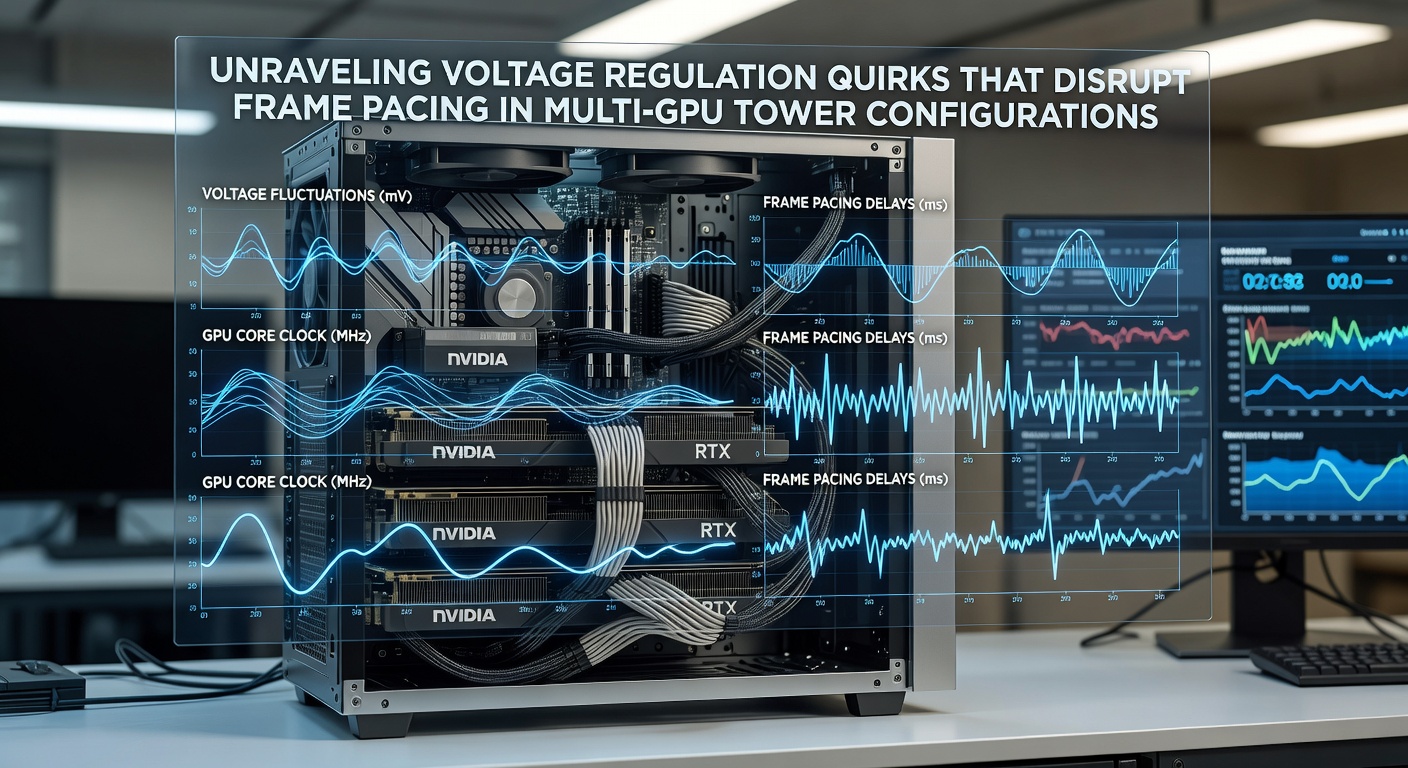
Take one case documented by European hardware testing facilities where dual-GPU towers exhibited periodic frame pacing breaks every 12 to 15 seconds during extended benchmark runs. Engineers traced the pattern to a specific voltage regulator controller chip that struggled to balance current sharing between the two cards when total system load crossed 650 watts. Data collected across dozens of similar builds indicates this behavior appears more frequently in configurations using older VRM designs that lack adaptive phase shedding.
Researchers have also recorded how software-level power management interacts with hardware quirks, and figures reveal that aggressive driver optimizations intended to boost clock speeds sometimes push voltage rails beyond the stable operating window. In May 2026 updates to several GPU driver suites addressed part of this interaction by introducing finer-grained telemetry, yet independent tests showed residual pacing variations persisted in towers with certain power supply units.
Diagnostic Approaches and Measurement Techniques
Professionals recommend monitoring per-GPU power telemetry alongside frame time logs to isolate regulation-related issues, since standard performance overlays rarely capture sub-millisecond variances. Tools that sample voltage rails at high frequency allow technicians to correlate droop events with spikes in frame delivery intervals, and this correlation method has become standard in research environments. Those who apply these techniques often discover that seemingly identical tower builds produce different results based on minor differences in cable routing or PSU rail distribution.
Industry organizations such as the IEEE Standards Association have published guidelines on power integrity testing for multi-device systems, and these documents emphasize the importance of measuring both static and dynamic voltage tolerances. Data compiled under those guidelines shows that regulation circuits meeting tighter tolerance bands reduce frame pacing deviations by measurable margins in controlled comparisons.
Configuration Adjustments That Address the Issues
Adjusting power limits through firmware utilities can stabilize voltage delivery by preventing sudden current surges, while ensuring matched power supply cables to each GPU minimizes impedance differences along the delivery path. Observers report that enabling synchronous clock modes in compatible driver stacks further reduces timing drift, although this requires hardware support that not every multi-GPU pairing provides. Thermal interface material replacement and improved case ventilation represent additional steps that indirectly support regulation stability by keeping component temperatures within narrower ranges.
Recent reports from Canadian research groups indicate that towers incorporating dedicated auxiliary power distribution boards experience fewer pacing disruptions, because these boards isolate GPU power planes from motherboard-level noise. Such hardware additions prove especially useful in compact tower layouts where trace lengths and shared ground planes amplify voltage fluctuations.
Conclusion
Voltage regulation quirks continue to surface as a measurable factor in frame pacing performance for multi-GPU tower configurations, and ongoing measurements through 2026 confirm their impact across varied hardware combinations. Systematic monitoring combined with targeted adjustments in power delivery paths helps maintain consistent frame timing, while emerging standards and driver refinements gradually narrow the window for these disruptions to occur.