Uncovering power delivery quirks from aging PSUs leading to GPU artifacting in demanding game titles
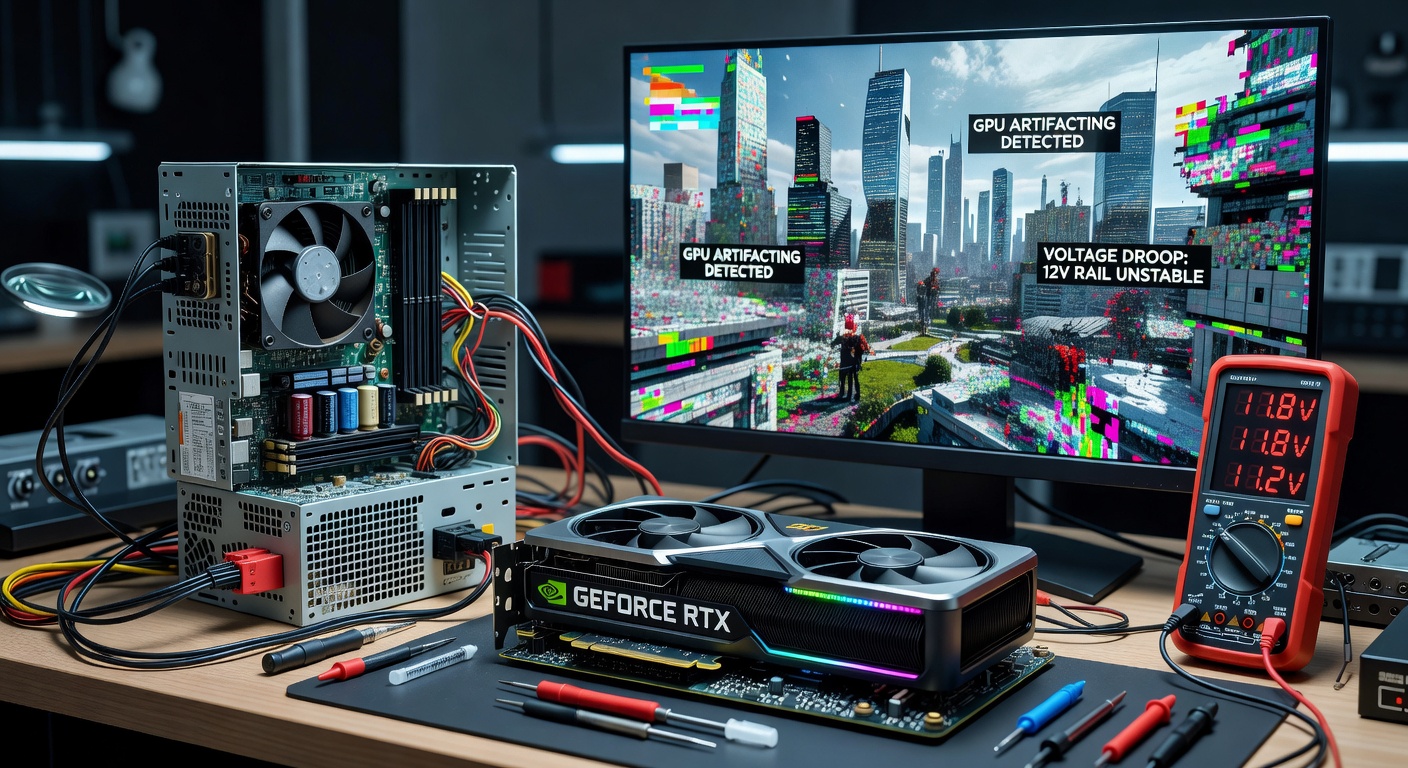
Power supply units in gaming systems experience gradual component degradation over years of operation, and researchers have documented how this process affects voltage stability delivered to graphics cards during extended high-load sessions. Data from hardware monitoring platforms shows that capacitors within PSUs lose capacitance as they age, which increases ripple on the 12V rail and creates conditions where GPUs encounter inconsistent power delivery. Those who've studied these patterns note that demanding game titles push graphics processors to sustained maximum utilization, amplifying any underlying fluctuations that manifest as visual artifacts on screen.
Component degradation in aging power supplies
Electrolytic capacitors form the core of voltage filtering circuits inside most consumer PSUs, and thermal stress combined with continuous current flow causes electrolyte evaporation that reduces their effectiveness. Studies conducted by university engineering departments have measured capacitance drops of 20 to 40 percent after five to seven years of typical gaming use, while equivalent series resistance rises correspondingly. This shift allows higher frequency noise to pass through to connected components, and graphics cards prove particularly sensitive because their memory modules and shader cores require tight voltage tolerances to maintain data integrity during complex rendering calculations.
Observers note that 80 Plus certified units still follow similar aging trajectories despite their initial efficiency ratings, since certification focuses on new-unit performance rather than long-term behavior under load. As of June 2026, aggregated telemetry from thousands of gaming systems indicates that PSUs older than six years account for a disproportionate share of reported artifact incidents during titles that maintain 90 percent or higher GPU utilization for extended periods.
Voltage instability and its effects on GPU operation
Modern graphics processors contain multiple power domains that must receive clean, stable voltage to prevent memory errors and computation faults. When PSU output exhibits increased ripple or momentary voltage sags, the GPU's integrated voltage regulators struggle to compensate, and error-correcting mechanisms in VRAM can become overwhelmed during texture streaming or shader compilation phases common in open-world and simulation-heavy games. Research indicates that these power anomalies produce characteristic artifact patterns such as texture corruption, color banding, and flickering polygons rather than complete system shutdowns.
Observed patterns in high-demand scenarios
Technicians working with affected systems report that artifacting often appears first in specific game engines known for heavy memory bandwidth demands, while lighter titles continue to render without visible issues. One study revealed that systems equipped with PSUs manufactured before 2019 showed a measurable uptick in artifact frequency once cumulative operating hours exceeded 15,000, particularly when paired with high-power GPUs drawing over 300 watts under load. The connection becomes clearer when monitoring software logs both PSU rail voltages and GPU error counters simultaneously.
Diagnostic approaches used by hardware analysts
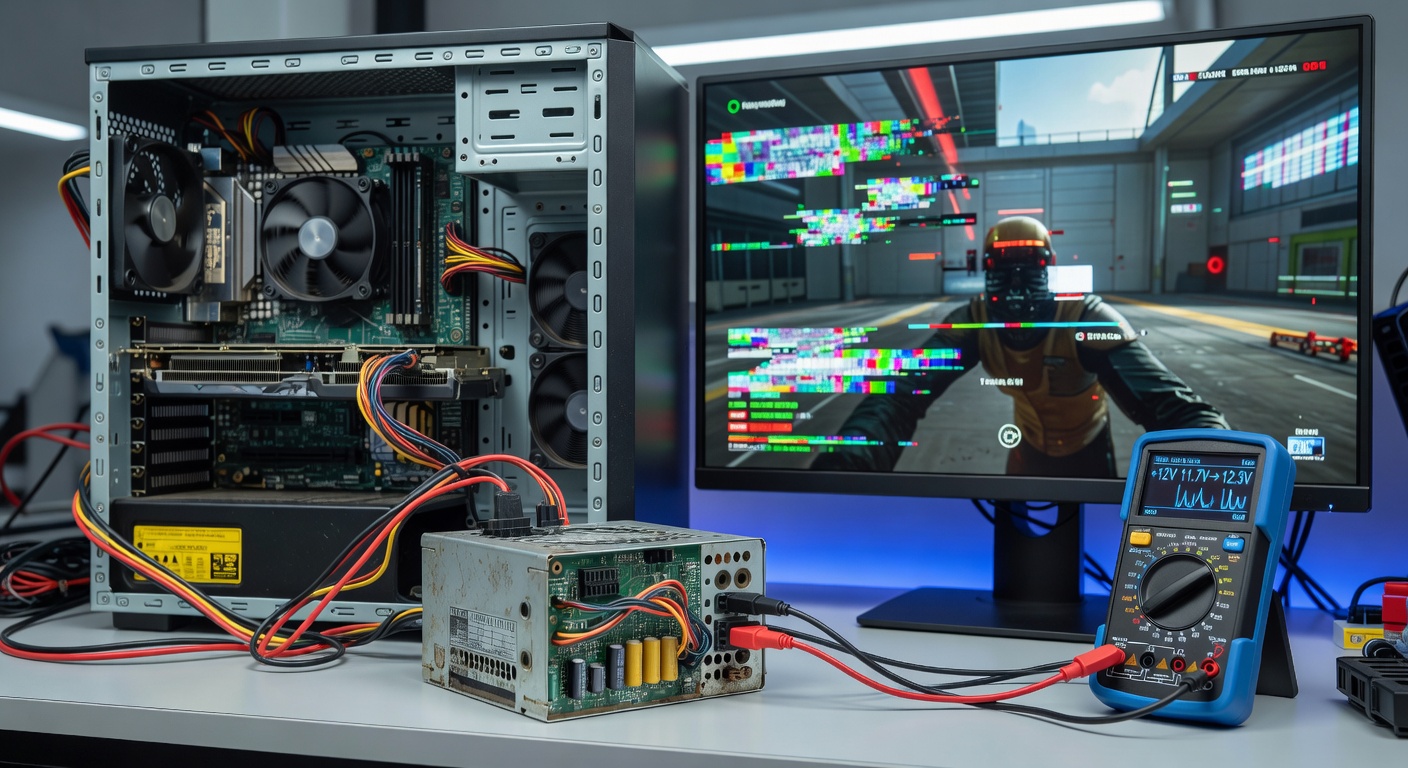
Engineers recommend logging voltage readings across all PSU rails during gameplay rather than relying solely on idle measurements, since degradation effects surface most clearly under sustained current draw. Software utilities that sample 12V, 5V, and 3.3V lines at sub-second intervals can reveal ripple exceeding manufacturer specifications, and cross-referencing these logs with artifact timestamps helps isolate power delivery as the source. Those who've examined multiple cases find that swapping in a newer PSU of equivalent wattage rating frequently eliminates the visual anomalies without requiring changes to GPU settings or drivers.
Industry reports from organizations tracking consumer electronics reliability note that power-related GPU issues have become more prevalent as average system lifespans extend beyond the typical replacement cycle for PSUs. According to data compiled by the National Institute of Standards and Technology, voltage regulation components show predictable wear curves that align with observed increases in graphics instability reports.
Preventive measures and component selection
Users maintain system stability by monitoring PSU fan operation and internal temperatures, since elevated heat accelerates capacitor aging and compounds existing voltage quirks. Replacement intervals based on total runtime rather than calendar years provide a more accurate approach, and selecting units with higher quality capacitors or hybrid designs extends reliable service life in gaming configurations. Research from academic labs indicates that units using Japanese-manufactured capacitors demonstrate slower degradation rates under identical thermal and electrical stress compared with lower-grade alternatives.
Figures from hardware testing facilities reveal that proactive PSU replacement before the six-year mark reduces artifact occurrences in high-end gaming builds by measurable margins, particularly when paired with GPUs that lack extensive onboard power conditioning. The reality is that power delivery remains one of several interconnected variables, yet aging PSU behavior stands out in cases where other components test within specification.
Conclusion
Power delivery quirks originating from aging PSUs create measurable voltage instability that leads to GPU artifacting under the sustained loads imposed by demanding game titles. Evidence gathered from monitoring data, laboratory measurements, and field observations demonstrates consistent patterns linking capacitor degradation to increased ripple and subsequent graphics errors. Those addressing these issues through systematic voltage logging and timely component replacement achieve restored stability without altering other system parameters. Continued documentation of these relationships supports more precise maintenance schedules for gaming hardware configurations.