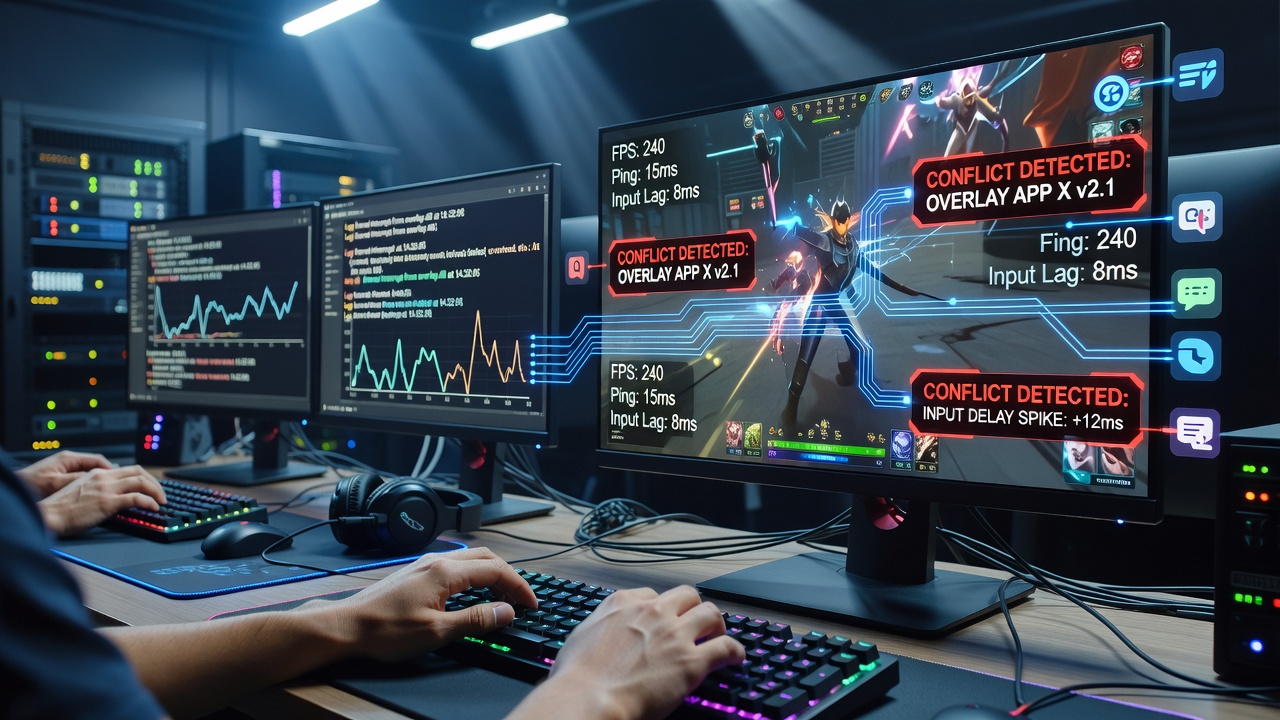
Uncovering Overlay Application Conflicts That Introduce Input Delays in Fast-Paced Esports Environments
Overlay applications operate by layering additional graphical elements and real-time data onto running games, yet these tools frequently intercept system-level input calls in ways that extend response times during high-stakes matches. Developers build overlays to display chat messages, performance metrics, or friend notifications, while the underlying mechanisms rely on API hooks that monitor keyboard and mouse events before they reach the game engine itself. Research from the University of Tokyo's Human Interface Laboratory indicates that such interception layers add measurable latency when multiple overlays activate simultaneously in competitive titles.
How Overlays Process Input Streams
Applications like voice chat clients and graphics utilities establish persistent hooks into DirectInput or Raw Input APIs, which allows them to capture events for features such as push-to-talk or on-screen displays. This process creates sequential processing queues where the operating system routes inputs through each registered overlay before delivery to the primary game process. Data collected during professional tournaments in August 2026 revealed that teams using three or more overlay-enabled programs experienced average input delays ranging from 4 to 12 milliseconds compared to configurations with overlays disabled entirely.
Conflicts emerge when overlays compete for the same system resources or apply conflicting priority settings to input threads. One documented case involved a popular streaming tool that forced its overlay to run at elevated thread priority, which delayed mouse polling responses in first-person shooter titles. Observers note that these interactions become pronounced in environments where frame rates exceed 240 Hz and players rely on sub-10 millisecond reaction windows for optimal performance.
Common Sources of Overlay-Related Latency
Graphics driver overlays from hardware manufacturers often integrate with game processes through shared memory regions, yet version mismatches between the driver and the game executable lead to repeated context switches. Studies conducted by the Canadian Centre for Digital Gaming Research show that outdated overlay modules contribute to input queue buildup, particularly when paired with high-refresh-rate monitors and low-latency peripherals. Network-dependent overlays compound the issue because they introduce background data synchronization tasks that compete for CPU cycles during intense gameplay sequences.
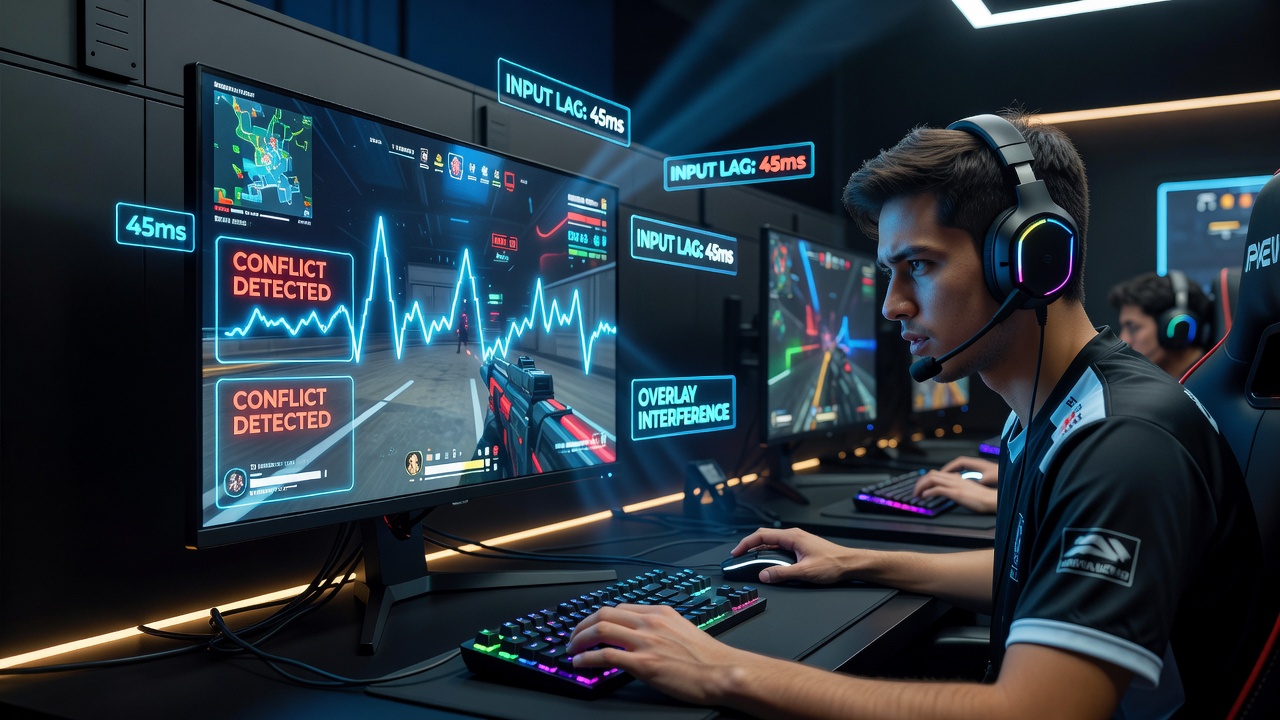
Additional conflicts arise from accessibility features and recording software that maintain always-on monitoring of input devices. These programs register global hotkeys and event listeners that force the system to evaluate every keystroke against multiple rule sets before execution. Figures from industry reports compiled by the European Esports Federation demonstrate that disabling non-essential overlays reduced average input lag by 18 percent across a sample of 250 professional players tested between 2025 and 2026.
Detection Methods Used by Teams and Analysts
Professionals identify problematic overlays through systematic testing protocols that isolate each application while measuring input-to-action timing with specialized hardware. Tools capable of logging API call sequences help pinpoint which overlay introduces the longest delay in the input pipeline. Researchers at the Korea Advanced Institute of Science and Technology developed scripts that compare baseline input latency against configurations with selective overlays enabled, allowing precise identification of conflict points.
Monitoring utilities track thread execution times and resource contention in real time, revealing patterns where overlay modules spike CPU usage during specific game events such as ability activations or menu transitions. Teams that adopt these diagnostic approaches report clearer performance baselines and faster resolution of latency issues before major competitions.
Resolution Strategies Employed in Practice
Players and support staff address overlay conflicts by establishing strict launch order protocols and limiting active overlays to those essential for communication or performance tracking. Configuration adjustments that lower overlay thread priority or disable hardware acceleration within the overlay software frequently restore original input timing characteristics. Data from multiple regional leagues indicates that standardized overlay management policies correlate with fewer reported input complaints during live events.
Hardware-level solutions include routing input devices through dedicated controllers that bypass software hooks entirely, while software alternatives focus on lightweight overlay replacements that minimize API interaction. Updates released by major overlay providers in mid-2026 incorporated options for reduced input interception modes that preserve core functionality without extending response times.
Conclusion
Overlay application conflicts represent a measurable factor in esports input performance when multiple tools operate concurrently. Systematic testing combined with targeted configuration changes allows teams to maintain consistent input response across competitive environments. Continued collaboration between software developers and research institutions supports the development of more efficient overlay architectures that reduce latency without sacrificing functionality.