Resolving background application conflicts that disrupt frame delivery in resource-intensive single-player campaigns
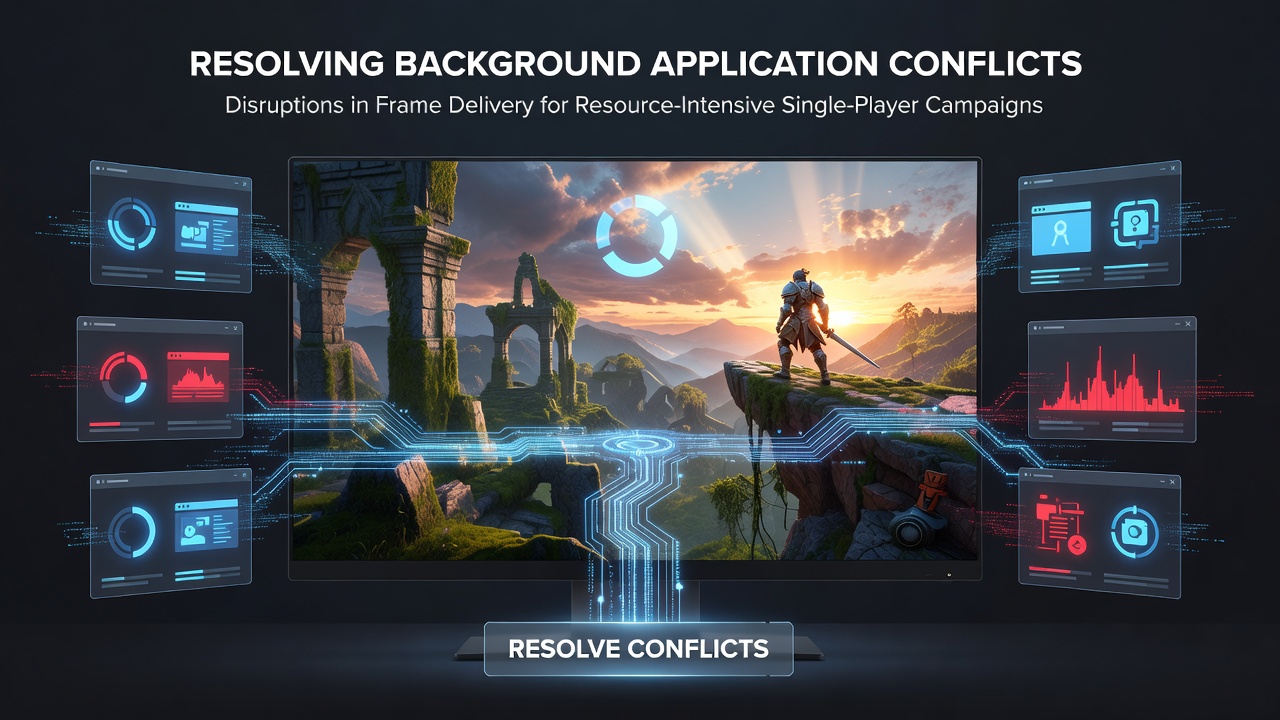
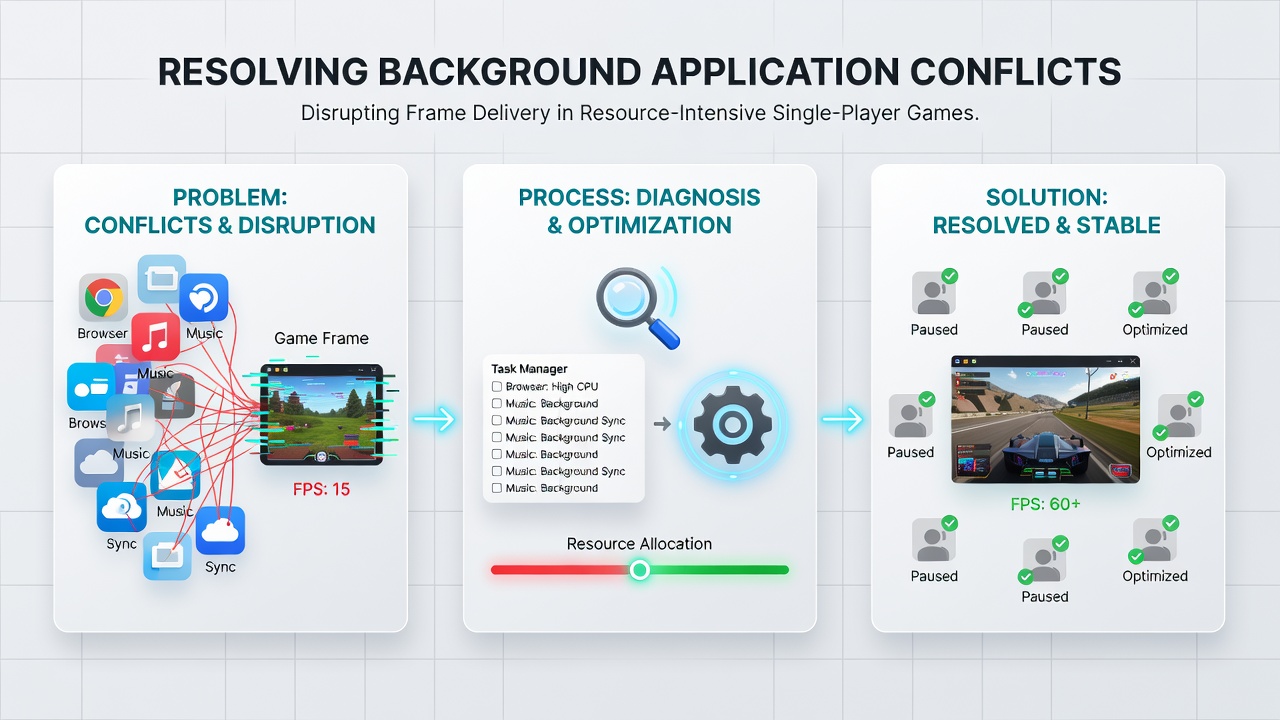
Background applications often compete for CPU cycles, memory bandwidth, and GPU resources during demanding single-player sessions, which leads to irregular frame delivery where games drop below target rates or exhibit pacing inconsistencies. Researchers at various institutions have documented how antivirus scanners, cloud sync tools, and browser instances running in the background create these interruptions, particularly in titles that push hardware limits with large open worlds or complex physics simulations.
Common Sources of Interference
Observers note that indexing services on Windows systems scan game directories in real time, and this activity spikes during exploration sequences that load new assets, while overlay software from streaming platforms continues to capture frames even when disabled, consuming additional processing overhead. Data from hardware monitoring studies shows that these conflicts become pronounced when games allocate more than 80 percent of available system memory, leaving minimal headroom for concurrent tasks. In July 2026, reports from European gaming hardware labs highlighted increased incidents tied to automatic update services that activate during long play sessions without user prompts.
Identifying Active Conflicts
People who monitor performance logs discover interference patterns by tracking frame time variances alongside process activity, and tools that log thread priorities reveal when background services elevate their CPU scheduling above game threads. One study from a Canadian research consortium found that disabling real-time protection features in security software reduced frame delivery variance by measurable margins in controlled tests across multiple single-player titles. Those who've examined telemetry data often trace spikes to specific executables like update agents or media players that poll network connections periodically.
Practical Resolution Steps
Experts recommend starting with a clean boot configuration that loads only essential drivers and services, which isolates non-critical applications and allows direct comparison of frame pacing before and after changes. Process affinity adjustments assign game executables to specific CPU cores while restricting others to secondary threads, and this technique proves effective when combined with priority elevation through task management interfaces. According to findings published by an Australian university engineering department, selective suspension of disk I/O intensive services like search indexing prevents load-related hitches that otherwise cascade into frame delivery problems.
Users frequently apply compatibility modes or launch options that limit background rendering features, and registry tweaks that defer automatic maintenance tasks until after shutdown provide longer-term stability. Industry reports from the Interactive Software Federation of Europe indicate that coordinated updates between game engines and operating system schedulers have reduced such conflicts in recent patches, particularly for titles released after 2024.
Preventive Configurations
Setting gaming sessions within dedicated power plans that disable sleep timers and network discovery features minimizes unexpected interruptions, while firewall rules that block outbound connections from non-essential applications keep them dormant. Those managing multi-monitor setups often disable secondary display outputs during intensive campaigns because extended desktop modes increase driver overhead that competes with primary rendering pipelines. Research from Japanese hardware testing facilities demonstrates consistent improvements when users create application-specific profiles that enforce high-performance GPU states and suppress adaptive brightness controls.
Conclusion
Systematic exclusion of background processes combined with targeted scheduler modifications restores consistent frame delivery in resource-heavy single-player environments, and ongoing monitoring through built-in performance counters helps maintain these gains across hardware generations. Data collected through 2026 continues to underscore the value of proactive configuration over reactive troubleshooting when addressing these delivery disruptions.