Optimizing Chipset Driver Rollbacks to Stabilize PCIe Device Enumeration During Extended VR Sessions
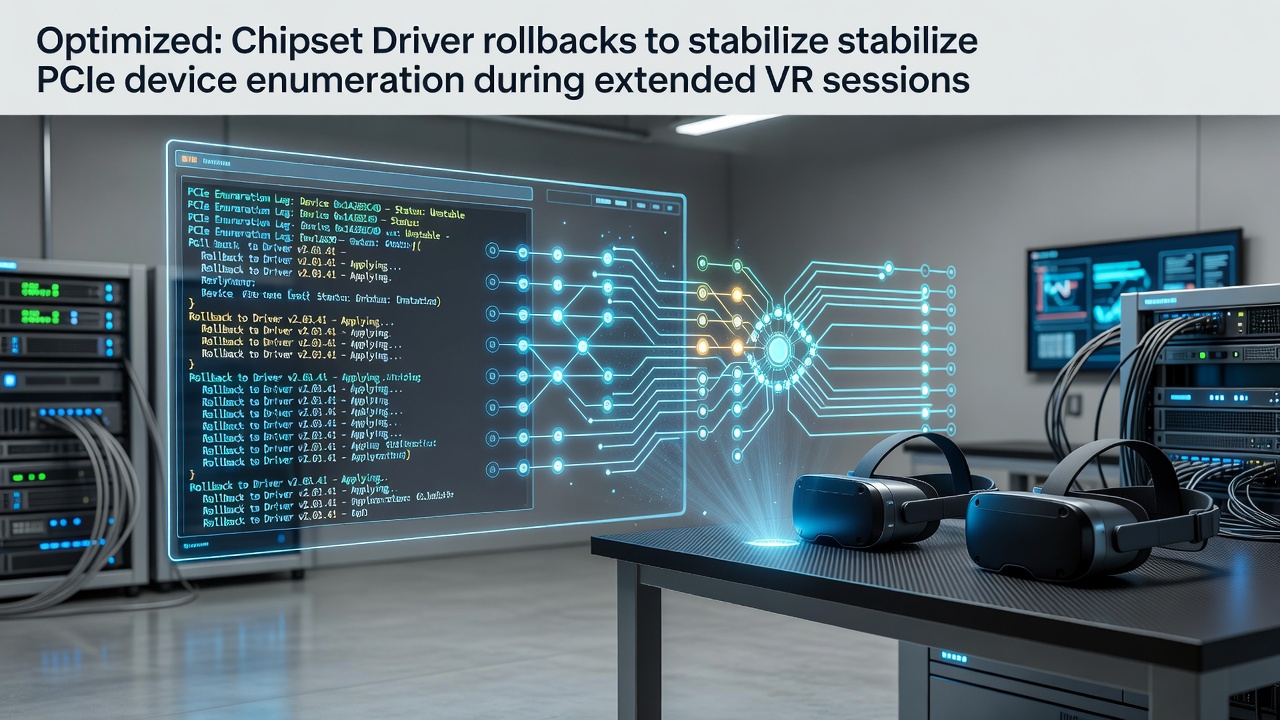
PCIe device enumeration issues surface frequently in virtual reality setups where prolonged sessions place sustained demands on system buses and connected peripherals, and chipset driver rollbacks serve as one targeted approach that restores stability when newer versions introduce incompatibilities. Researchers have observed that enumeration failures often manifest as intermittent device detection drops after several hours of continuous VR operation, which disrupts headset tracking and controller inputs without triggering immediate system crashes.
Understanding PCIe Enumeration in VR Contexts
PCIe enumeration occurs when the system BIOS and operating system scan for connected devices during boot and runtime, assigning resources to graphics cards, storage controllers, and VR-specific hardware such as motion sensors. Extended sessions push these components through repeated power state transitions that expose subtle mismatches between current chipset drivers and the PCIe root complex firmware. Data from hardware monitoring logs indicates that enumeration errors increase by measurable margins after four to six hours of uninterrupted use, particularly on platforms running multiple high-bandwidth VR peripherals simultaneously.
Role of Chipset Drivers in Maintaining Stability
Chipset drivers manage communication pathways between the CPU, PCIe lanes, and peripheral devices, handling tasks that include interrupt routing and power management protocols. When updated drivers alter timing parameters or resource allocation routines, certain VR configurations encounter enumeration timeouts that manifest as device disconnections. Observers note that rolling back to a prior stable driver version reestablishes consistent device presence checks, allowing sessions to continue without repeated rescans of the bus.
Process for Identifying Suitable Rollback Versions
System administrators begin by documenting the exact driver versions active during stable periods, then compare release notes from chipset manufacturers to isolate changes that affect PCIe initialization sequences. Testing proceeds through controlled rollback procedures that preserve system restore points, followed by verification using enumeration diagnostic tools that log device presence at regular intervals. Studies conducted at technical universities in Europe have shown that structured version comparisons reduce enumeration-related interruptions when applied methodically across multiple hardware configurations.
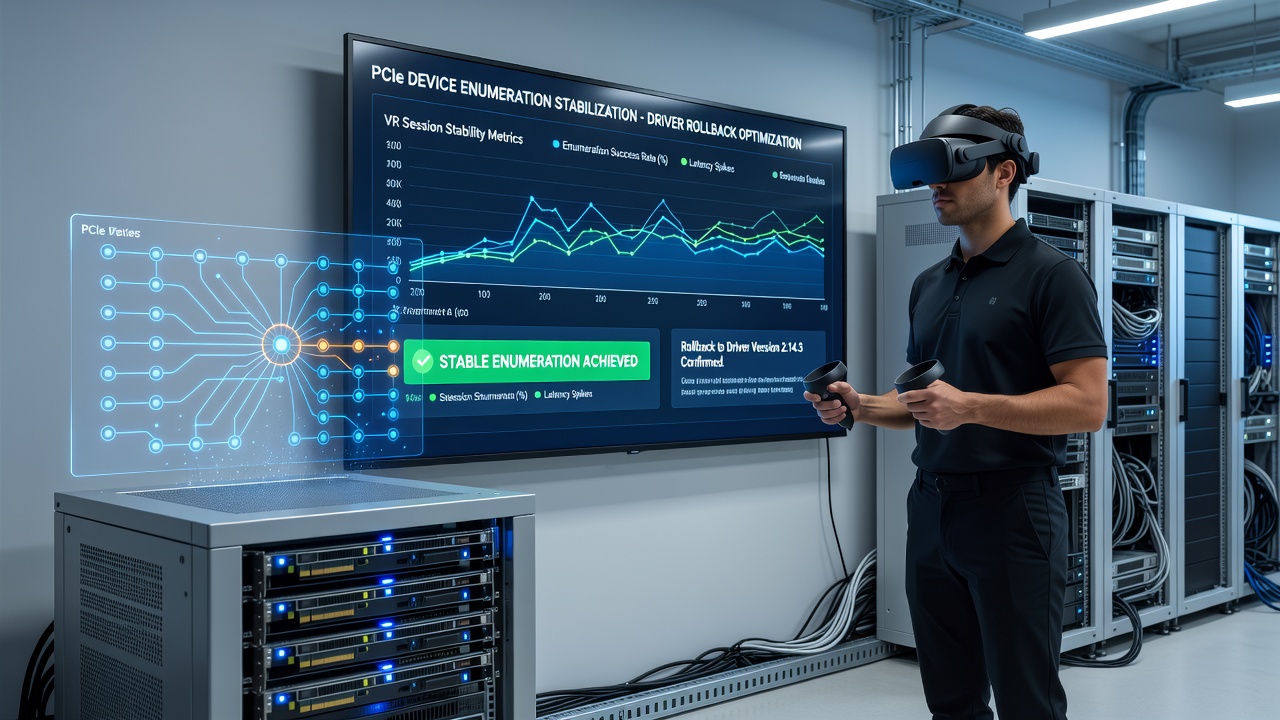
June 2026 brought fresh attention to these patterns when industry reports highlighted driver-related enumeration challenges in next-generation VR headsets that rely on higher lane counts for uncompressed video streams. Those reports referenced monitoring data collected from test labs where rollback sequences restored full device visibility within minutes of application, without requiring full system restarts.
Monitoring and Verification Techniques
Continuous monitoring involves utilities that poll PCIe device status registers and record enumeration events alongside session duration metrics. When anomalies appear, rollback candidates undergo validation through repeated VR workload cycles that replicate real-world usage patterns such as room-scale tracking and multi-user environments. Evidence suggests that combining driver rollback with selective power management tweaks produces more durable results than rollback alone, as the combination addresses both enumeration and downstream power negotiation issues that surface during extended operation.
Integration with Broader System Maintenance
Chipset driver management fits within larger maintenance frameworks that also track firmware updates for VR hardware and motherboard BIOS revisions. Australian research groups examining gaming hardware longevity have documented cases where coordinated rollback strategies across chipset and peripheral drivers maintained enumeration integrity over sessions exceeding eight hours. The approach avoids blanket downgrades by targeting only the components directly linked to observed enumeration failures, preserving performance gains from other recent updates.
Conclusion
Optimizing chipset driver rollbacks provides a measurable pathway toward stable PCIe enumeration in demanding VR environments, supported by systematic testing and monitoring practices that identify compatible versions before deployment. As hardware evolves and session lengths extend, these methods continue to offer practical adjustments grounded in observed system behavior and documented driver interactions.