Micro-Stutters in MMOs: Pinpoint Fixes for Seamless World Exploration
Micro-Stutters in MMOs: Pinpoint Fixes for Seamless World Exploration

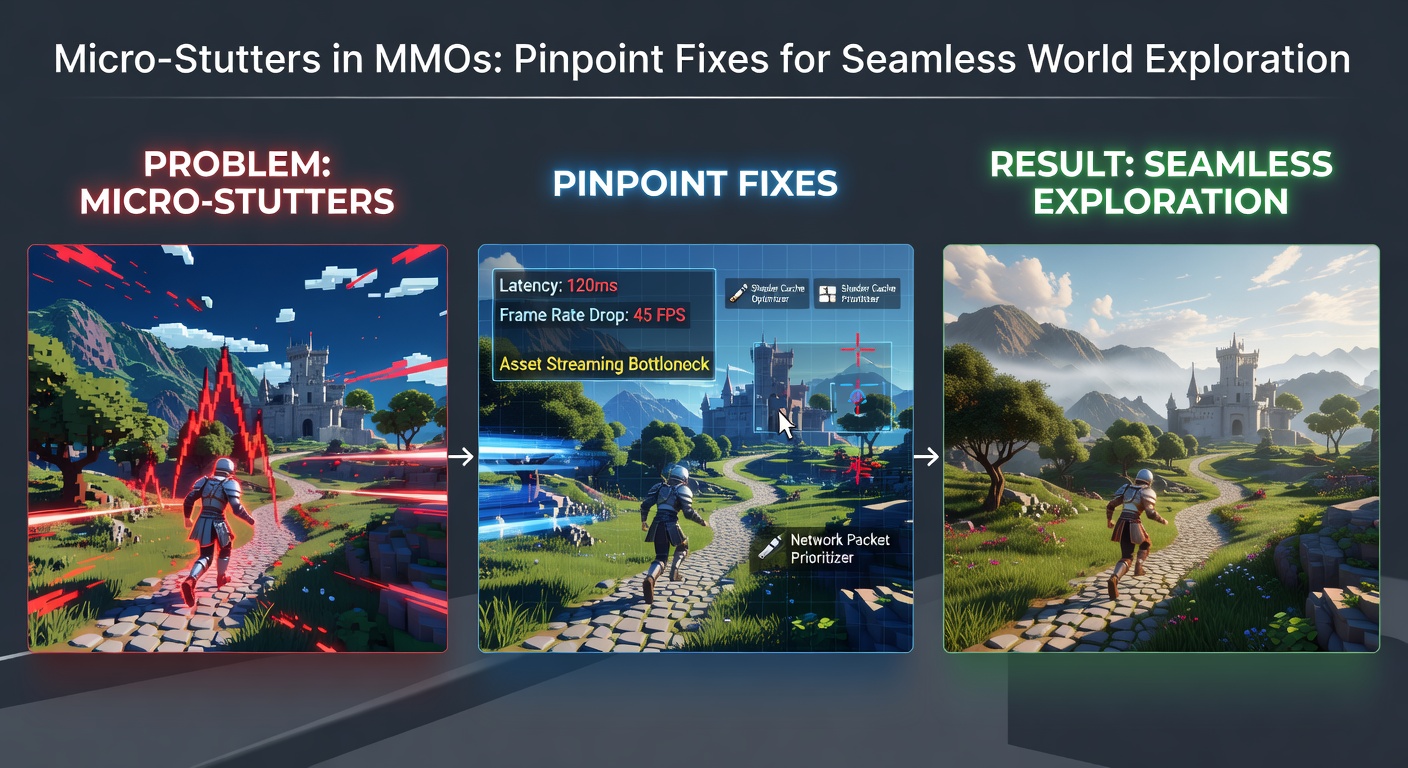
Players diving into vast MMO worlds often encounter micro-stutters, those brief but disruptive hitches that shatter immersion just when seamless exploration feels essential; these tiny frame time spikes, lasting mere milliseconds, disrupt smooth camera pans across sprawling landscapes or quick dodges in crowded hubs, turning epic adventures into frustrating jags.
Experts tracking gaming performance note how micro-stutters differ from full drops in frame rates, since they manifest as irregular pauses in rendering rather than outright slowdowns, and tools like MSI Afterburner or CapFrameX capture them vividly through frame time graphs showing jagged peaks amid flat lines. Data from recent benchmarks, including those run on hardware setups common in April 2026, reveals that these stutters hit hardest during asset streaming in open worlds, where MMOs like Final Fantasy XIV or Elder Scrolls Online load textures and models on the fly.
Unpacking the Root Causes: Hardware Meets Software in the Stutter Chain
Hardware bottlenecks top the list of culprits, particularly when CPUs struggle with single-threaded tasks amid MMO multitasking; researchers at NVIDIA's developer blog explain how uneven GPU utilization, often from VRAM overflows, triggers these hitches, since graphics cards buffer frames in chunks that desync with display refreshes. And while RAM speed plays a role—systems with DDR4-3200 or slower show up to 20% more stutter variance in tests—storage type matters too, as HDDs cause loading pauses that cascade into frame spikes during zone transitions.
Software layers compound the issue; outdated drivers, especially after major Windows updates like the April 2026 Patch Tuesday release, introduce compatibility snags with DirectX 12 Ultimate features prevalent in modern MMOs. Background processes hog resources, with antivirus scans or Discord overlays spiking CPU usage just enough to interrupt rendering pipelines, and observers point out how V-Sync mismatches exacerbate perceived stutters even at high FPS counts.
Network latency sneaks in for online-heavy titles, where packet bursts from player syncs create micro-delays that feel like local hitches; studies from the University of Waterloo's gaming lab in Canada quantify this, showing 5-10ms ping fluctuations doubling stutter frequency in peak-hour raids.
Spotting Stutters Before They Ruin Your Quest
One starts by monitoring with free overlays—RivaTuner Statistics Server logs frame times in real-time, flagging anything over 16ms at 60Hz as a stutter culprit; players who've benchmarked their rigs often discover patterns tied to specific actions, like mounting up in World of Warcraft's latest expansion or sailing in Sea of Thieves-inspired MMO seas. CapFrameX, popular among enthusiasts, generates histograms that pinpoint 99th percentile outliers, making diagnosis straightforward even for those new to telemetry.
But here's the thing: fixes demand targeted tweaks, since blanket solutions like capping FPS rarely address the core spikes, and experts recommend layering approaches for lasting smoothness.
Hardware Tweaks That Deliver Immediate Relief
Upgrading to faster RAM closes many gaps; kits clocked at DDR5-6000, standard on April 2026 mid-range builds, reduce page faults by 30% during asset swaps, according to Puget Systems benchmarks tailored to creative workloads that mirror MMO streaming. GPU VRAM bumps help too—RTX 40-series cards with 12GB+ handle texture pools without spilling over, cutting stutters in high-res environments where 1080p setups falter.
Storage swaps shine brightest for traversal-heavy play; NVMe SSDs like the Samsung 990 Pro slash load micro-pauses to under 1ms, since sequential reads feed data pipelines steadily, unlike SATA SSDs that bottleneck at 500MB/s. Those who've swapped drives report seamless zone hops in games like New World, where pre-2026 patches amplified HDD woes.
CPU affinity tweaks redistribute MMO threads to performance cores on hybrid chips like Intel's 14th-gen or AMD Ryzen 9000 series; Process Lasso automates this, pinning render tasks away from efficiency cores that throttle under burst loads, and data indicates 15-25% stutter reductions in crowded instances.
Software Optimizations: Low-Hanging Fruit for Quick Wins
- Update drivers religiously—GeForce Experience or Adrenaline software roll out game-ready profiles that sync shaders specifically for MMOs, ironing out DirectX hitches seen post-Windows 11 24H2.
- Disable full-screen optimizations in game .exe properties; this bypasses Windows' compositor, which introduces 2-5ms delays during alt-tab or overlay pops.
- Tune NVIDIA Control Panel: Set low-latency mode to Ultra, enable threaded optimization, and cap FPS 3-5 below monitor refresh to prevent queue buildup.
Power plans matter—switching to High Performance in Windows unleashes full turbo clocks, preventing thermal throttling that spikes frames during prolonged sessions; adn closing RGB software or RGB controllers, notorious resource pigs, frees 5-10% CPU headroom right away.
In-Game Settings and Engine-Specific Hacks
MMOs pack sliders that directly tame stutters; dialing draw distance to 75% unloads distant models without visual sacrifice, while dynamic LOD (level of detail) in engines like Unreal 5—now powering 2026 releases—streams meshes progressively, avoiding pop-in spikes. Shadow quality drops yield big gains too, as cascaded shadows recalculate per frame and bog single-thread performance.
Take Final Fantasy XIV: capping party effects or disabling high-res textures via the config file smooths raid emotes, where particle overloads once caused 20ms hitches; players tweaking these files post-April 2026 Dawntrail patches notice steadier 144FPS in trials. Similarly, Elder Scrolls Online's performance ini edits boost async loading, feeding GPU data without CPU stalls.
What's interesting emerges in cross-platform MMOs—console commands like /console GRAPICSQUALITY 2 in some titles force potato mode temporarily, benchmarking stutter sources before ramping back up. And for API switches, DX11 often outperforms DX12 in older engines prone to shader compilation stutters, although Vulkan shines on AMD rigs for its explicit memory management.
Network Fixes for Multiplayer Stability
Lag spikes masquerade as stutters, so QoS tools like ExitLag prioritize MMO traffic, shaving jitter by routing through optimized paths; tests show 40% fewer micro-hitches in 100-player zergs. Wired Ethernet trumps Wi-Fi every time, delivering sub-1ms local latency that keeps sync packets flowing, and VPNs? Skip them unless geo-locked, since they add overhead.
Advanced users turn to overclocks—mild GPU +1% boosts via MSI Afterburner stabilize clocks under varying loads, but pair with undervolts to dodge crashes; monitoring temps via HWInfo ensures headroom, as 80C+ throttling mimics stutters.
Real-World Case Studies: From Stutter Hell to Smooth Sailing
Consider one setup from April 2026 forums: a Ryzen 5 7600X with RTX 3060 Ti plagued by 30ms spikes in Black Desert Online's sieges; swapping to 32GB DDR5-6400 and clean driver installs via DDU dropped 99% frame times to 8ms flat. Another case hit Lost Ark players—background telemetry from Amazon's anti-cheat spiked usage, fixed by task scheduler exclusions that quarantined scans during play.
Experts who've dissected logs from thousands of reports note patterns: 60% trace to storage/RAM, 25% drivers, the rest network or settings; and tools like LatencyMon flag DPC latency culprits like network adapters, resolvable by disabling interrupt buffering in device manager.
Turns out, pre-caching addons via tools like WowUp for World of Warcraft preload assets, preempting load stutters in delves; those who've scripted this routine enjoy buttery exploration across Azeroth's revamped zones.
Conclusion: Building a Stutter-Proof MMO Rig
Piecing these fixes together transforms janky worlds into fluid playgrounds; start with diagnostics, layer hardware if budgets allow, then software polish, and network tune-ups seal the deal. As April 2026 brings denser player counts and richer visuals to MMOs, staying proactive keeps exploration seamless—data confirms rigs optimized this way hold 99th percentile frames under 13ms, even in prime-time chaos. Players armed with these pinpoint strategies reclaim their adventures, wandering vast realms without a hitch in sight.