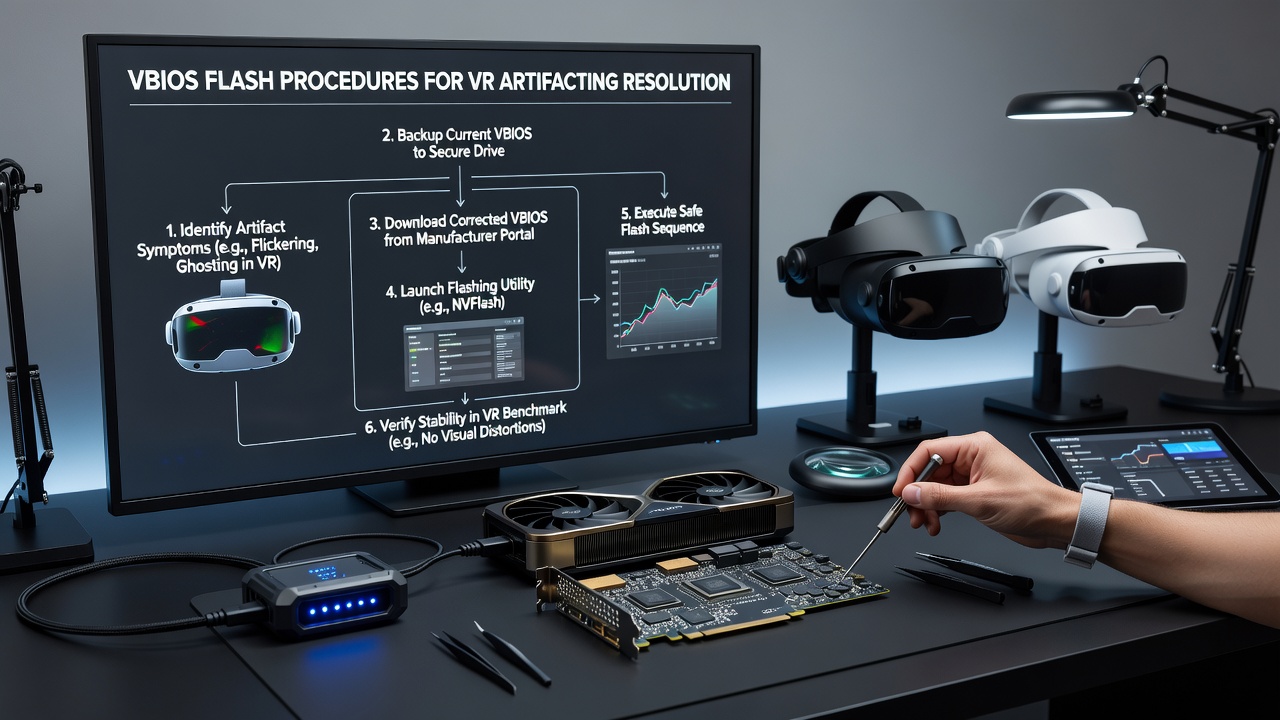
Mapping Out VBIOS Flash Procedures That Resolve Artifacting Issues in Graphics Cards Used for Virtual Reality Experiences
Graphics cards powering virtual reality setups often encounter artifacting when memory timings or voltage tables in the onboard VBIOS drift from optimal parameters under sustained high loads, and manufacturers release updated firmware versions that recalibrate these settings to stabilize output during extended sessions. Observers note that such issues appear more frequently in cards paired with headsets running at elevated refresh rates where thermal and power demands intensify over time. Research indicates that targeted VBIOS flashes address specific artifact patterns like color shifts or line artifacts that disrupt immersion without requiring hardware replacement.
Understanding Artifacting in VR Graphics Contexts
Artifacting manifests as visual corruption on screen when GPU memory controllers fail to maintain signal integrity across VR frame buffers, while data from hardware monitoring tools shows these errors correlate with outdated VBIOS revisions in cards from multiple vendors. Studies conducted by research institutions highlight how VR workloads expose timing mismatches that remain dormant during standard desktop use, and figures reveal increased reports during peak summer usage periods when ambient temperatures rise. In August 2026, several major GPU lines received firmware revisions specifically tuned for VR stability following aggregated telemetry from headset manufacturers.
Those who analyze failure logs find that certain artifact types trace directly to power delivery tables embedded in older VBIOS releases, and cross-referencing with manufacturer changelogs confirms that updates often refine these tables to prevent voltage spikes during rapid frame transitions. Experts at industry trade groups have documented cases where flashing resolves persistent glitches that persist across driver reinstalls and system restarts.
Preparation Steps Before Initiating a Flash
Preparation begins with verification of the current VBIOS version through utilities provided by the card manufacturer, and users extract this information alongside the exact model number adn serial data to ensure compatibility with available updates. Backup procedures require specialized tools that create a complete image of the existing firmware, which then gets stored on separate media to allow restoration if the new version introduces unforeseen conflicts. Researchers recommend cross-checking the downloaded file against checksums published on official support portals to confirm integrity before any write operation starts.
System preparation includes disabling onboard security features that might interrupt the flash process and ensuring the host machine maintains stable power through an uninterruptible supply, since interruptions during the write cycle can render the card inoperable. Data from support databases shows that preparation errors account for a significant portion of unsuccessful attempts across both consumer and professional VR installations.
Executing the Flash Procedure
Execution relies on command-line utilities distributed by GPU makers, and these programs accept parameters that specify the target card along with the path to the new VBIOS image. The process typically involves a single command that erases the existing firmware section and writes the replacement, with progress indicators appearing in the terminal window throughout the operation. Observers who have reviewed technical documentation note that the entire sequence completes within seconds on modern systems, after which the machine requires a full power cycle to load the updated tables.
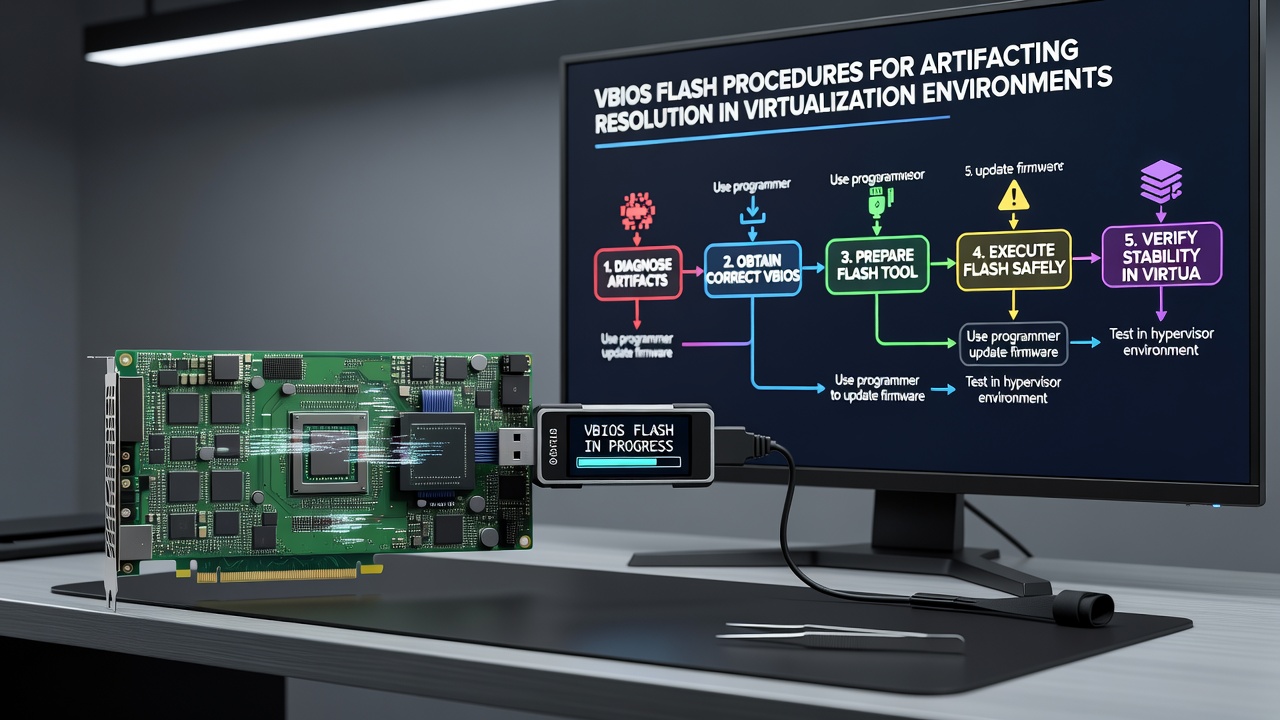
Post-flash verification uses the same monitoring utilities to confirm the new version number registers correctly, and subsequent stress tests in VR environments check whether artifact patterns have subsided under prolonged loads. According to findings published by the National Institute of Standards and Technology, systematic verification after firmware changes reduces recurrence rates of memory-related display errors in high-performance computing setups that share similarities with VR rendering pipelines.
Validation and Follow-Up Monitoring
Validation extends beyond immediate testing into ongoing monitoring of temperature and power metrics during regular VR sessions, since new VBIOS revisions can alter fan curves or power limits that affect long-term component behavior. Those maintaining multi-card configurations report that each device requires individual verification to ensure uniform firmware levels across the setup. Industry reports from the Entertainment Software Association indicate that consistent firmware management correlates with fewer support incidents in consumer VR deployments tracked through 2026.
Additional monitoring involves logging frame timing data to detect any residual micro-stutters that might remain after the flash, and adjustments to related driver settings often complement the firmware update when initial results fall short of expectations. Researchers continue to track how evolving VR content pushes hardware boundaries and prompts further VBIOS refinements from manufacturers.
Conclusion
Mapping VBIOS flash procedures provides a documented pathway for addressing artifacting in VR graphics cards when the root cause lies in firmware-level timing or voltage configurations. Data collected across multiple hardware generations demonstrates that careful preparation, execution, and verification steps yield measurable improvements in visual stability without hardware intervention. Continued updates from manufacturers in periods such as August 2026 reflect ongoing adaptation to the demands of immersive computing environments.