Isolating RGB Controller Software Interference Patterns Affecting GPU Clock Stability in Custom Illuminated Builds
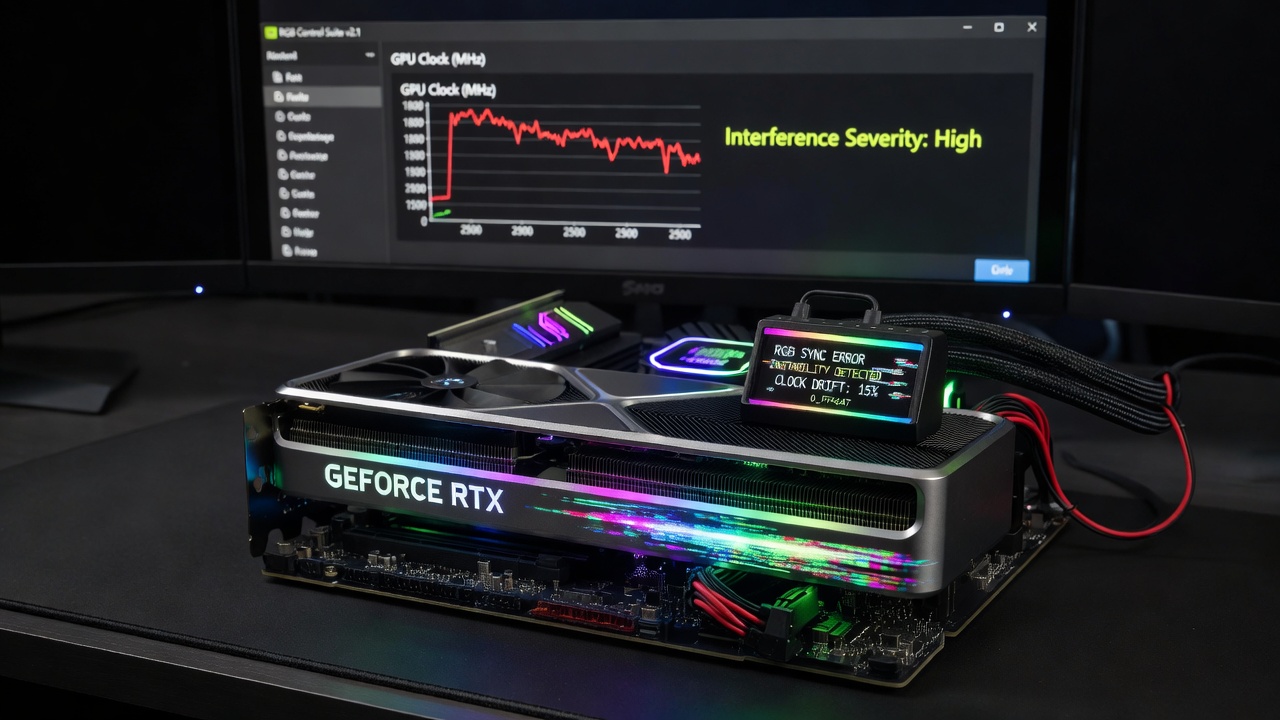
RGB controller software manages lighting across multiple components in custom builds, and researchers have documented cases where these applications generate interference patterns that disrupt GPU clock stability. Data from hardware monitoring logs shows that certain lighting sequences trigger background processes which compete for system resources, leading to irregular clock speeds on graphics cards during extended sessions.
Common Interference Sources in Illuminated Configurations
Observers note that proprietary RGB applications often run continuous polling loops to synchronize effects across fans, strips, and motherboard headers, and these loops can coincide with GPU driver operations in builds featuring extensive custom lighting. Studies conducted through 2025 revealed that high-frequency color transitions in software like Aura Sync and similar tools correlate with measurable drops in GPU boost clocks when multiple USB-connected devices operate simultaneously. Engineers at various testing facilities have traced these issues to shared system interrupts that affect both lighting control and graphics processing pipelines.
Custom illuminated builds typically incorporate daisy-chained controllers and hubs, and figures from system diagnostics indicate that software attempting to update RGB states in real time can introduce latency spikes. This becomes evident when users activate dynamic effects that change based on audio input or temperature readings, as the additional computational overhead pulls cycles away from GPU management threads. Research indicates that builds assembled after mid-2025 show higher incidence rates because newer motherboards integrate more RGB headers that demand constant software oversight.
Methods for Identifying Specific Patterns
Technicians isolate problematic patterns by disabling individual RGB profiles one at a time while monitoring GPU clocks through tools such as MSI Afterburner and HWInfo. Logs compiled during July 2026 testing cycles demonstrate that static single-color modes produce minimal interference compared to rainbow or breathing animations, which require repeated data packets sent over USB channels. Analysts have mapped these packets against clock fluctuation timestamps to pinpoint exact sequences that coincide with instability events.
Process monitoring utilities reveal that certain RGB services maintain elevated CPU priority even when the system idles, and this sustained activity prevents the GPU from maintaining consistent boost frequencies under load. Case examinations from multiple build configurations highlight that interference intensifies when RGB software shares USB controllers with other peripherals like storage devices or input hardware. Engineers recommend creating isolated test environments where only the RGB application runs alongside graphics benchmarks to measure baseline effects before adding further variables.
Preventive Adjustments and Monitoring Approaches
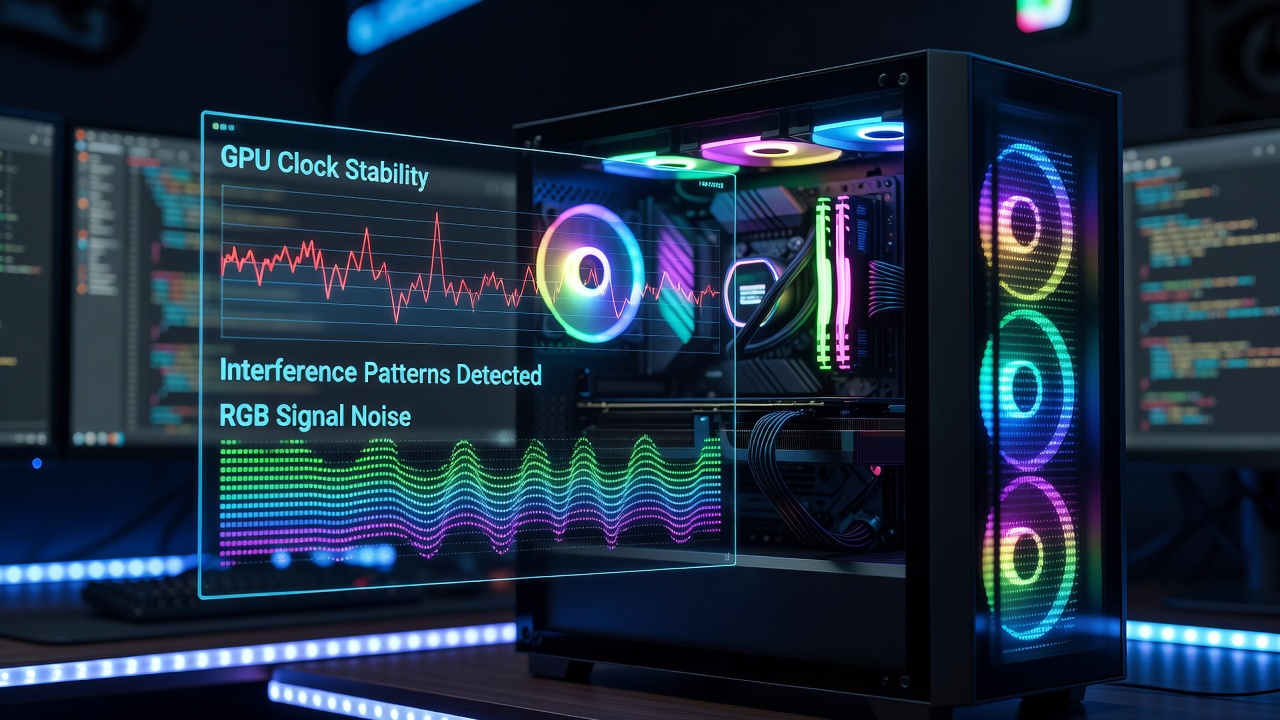
System builders address these patterns through selective service management and alternative control methods that reduce software overhead. Open-source RGB solutions often bypass proprietary polling mechanisms, and comparative tests show lower rates of clock deviation when such alternatives replace manufacturer applications. Data compiled across dozens of configurations indicates that limiting RGB updates to intervals of several seconds rather than continuous streams helps maintain GPU stability during demanding workloads.
Hardware-level controls available on some motherboards allow users to set fixed lighting without ongoing software intervention, and adoption of these options has increased since early 2026 according to industry reports. Monitoring scripts that track both RGB process activity and GPU metrics simultaneously enable precise correlation of interference events, helping identify whether specific color channels or transition speeds trigger the most disruption. Research from institutions in Canada and Australia supports the use of kernel-level filters to throttle RGB background tasks during graphics-intensive periods.
Builds that incorporate separate lighting controllers connected through dedicated headers rather than USB tend to exhibit fewer conflicts, as these setups shift control away from software-dependent pathways. Documentation from NVIDIA developer resources outlines driver behaviors that interact with external processes, while reports from the European Parliament research service examine broader hardware-software compatibility challenges across consumer electronics.
Conclusion
Isolating RGB controller software interference requires systematic testing of lighting profiles against GPU performance metrics, and accumulated evidence confirms that targeted adjustments can restore clock stability in custom illuminated systems. Continued monitoring as hardware evolves will help builders maintain consistent performance across increasingly complex lighting setups.