Investigating Legacy USB Protocol Interactions That Influence Precision Aiming in Tactical Shooters
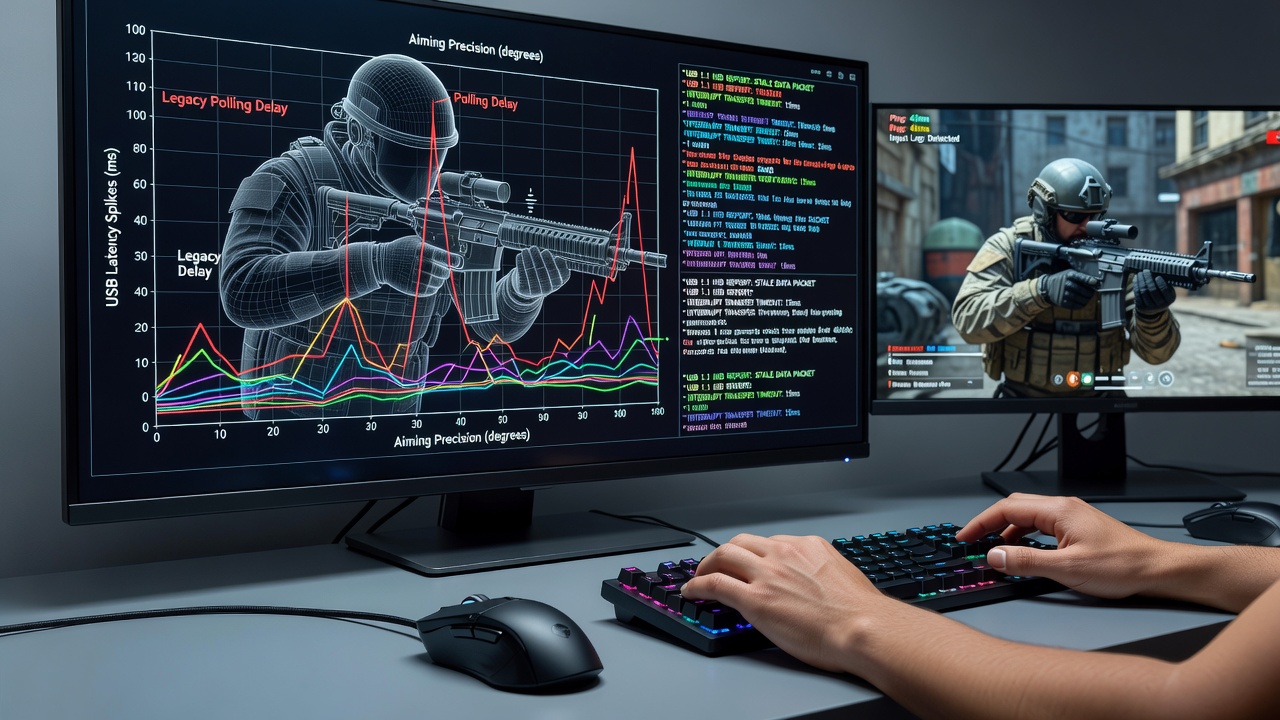 Legacy USB protocols continue to shape input performance in tactical shooters because many peripherals still rely on older specification layers even when connected to modern systems. USB 1.1 and full-speed 2.0 modes use fixed polling intervals that create measurable timing variations during rapid mouse movements required for pixel-perfect aiming. Researchers at technical institutions have documented how these intervals interact with operating system HID drivers to produce small but consistent latency spikes under sustained load. USB specifications define interrupt transfer endpoints with maximum rates tied to the bus version, so full-speed devices report data no faster than once per millisecond while high-speed endpoints reach 125-microsecond intervals. When a legacy mouse negotiates a lower-speed connection through an older hub or cable, the entire input chain drops to that rate and introduces jitter that tactical shooters notice during tracking and flick shots. Data from input latency tests conducted in 2025 shows these variations become more pronounced when multiple legacy devices share the same controller.
Protocol Negotiation and Endpoint Behavior
Modern chipsets attempt to maintain backward compatibility by falling back to the lowest common protocol when a peripheral does not advertise high-speed support. This fallback occurs silently during enumeration, leaving users unaware that their aiming device has switched to a slower mode. Observers note that Windows and Linux HID stacks handle these transitions differently, with the former sometimes inserting additional buffering that compounds the original interval limitation.
Endpoint descriptors in legacy devices often specify smaller maximum packet sizes, which forces the host controller to issue more frequent requests to deliver the same volume of movement data. In tactical shooters where sub-millisecond precision matters, these extra requests compete with other system interrupts and create irregular delivery patterns. Studies from European hardware labs have measured increased standard deviation in reported coordinates when devices operate under these constraints.
Observed Effects in Live Gameplay Environments
Competitive players using decade-old mice through USB 2.0 hubs have reported inconsistent crosshair behavior during prolonged engagements, and frame-by-frame analysis confirms the input stream contains periodic gaps matching the legacy polling schedule. These gaps become visible when the game engine samples input at higher rates than the device can supply, resulting in duplicated or skipped position updates.
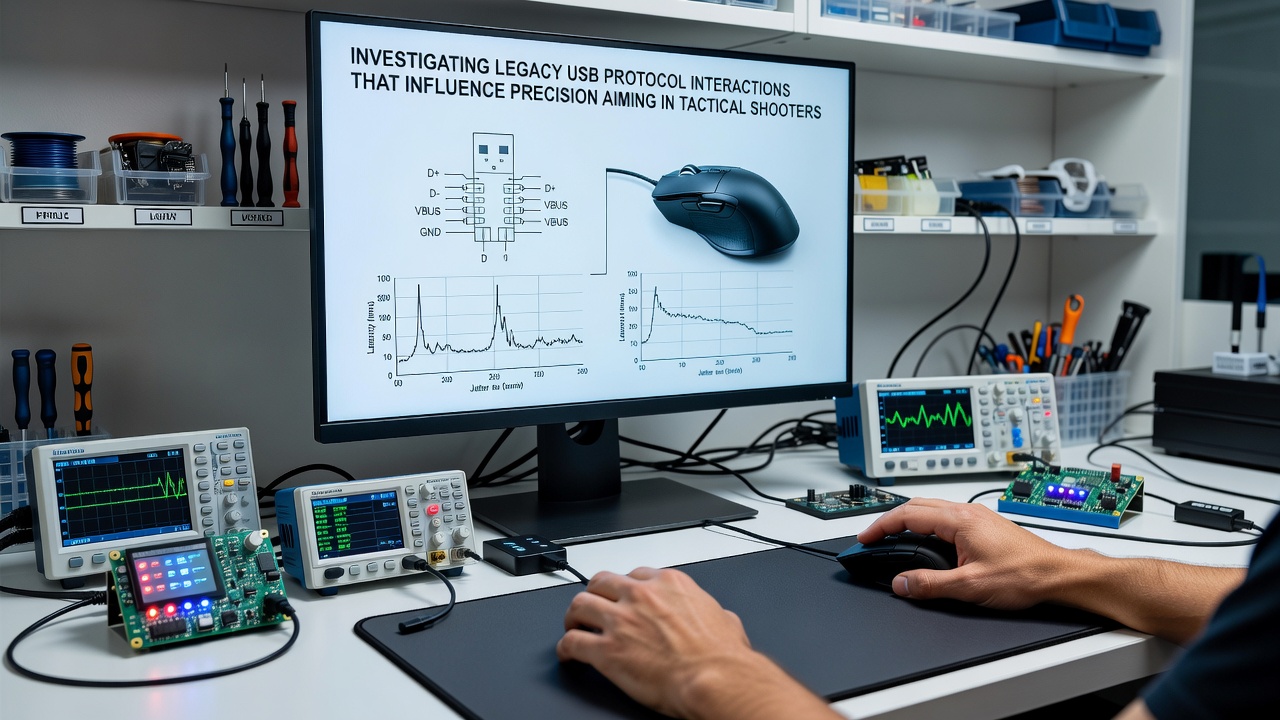
As of June 2026, several esports organizations have begun requiring players to document their USB topology before major tournaments because legacy interactions have been identified as a contributing factor in aim inconsistency complaints. Tournament officials reference USB-IF compliance documents to establish baseline expectations for peripheral behavior under high-speed conditions.
Research Findings on Jitter Sources
Independent testing groups have isolated jitter sources by comparing the same mouse connected through native high-speed ports versus legacy hubs. Results consistently show elevated timing variance when the connection traverses an older protocol layer, even if the physical cable supports newer speeds. The variance manifests as clusters of delayed packets followed by catch-up bursts that disrupt smooth aim trajectories.
Academic papers from North American universities have modeled these interactions using queueing theory and found that legacy endpoint scheduling creates deterministic patterns rather than random noise. These patterns align with observed aiming errors in titles that rely on raw input processing without additional smoothing filters.
Mitigation Approaches Documented by Technicians
Technicians recommend forcing high-speed negotiation by using certified cables and avoiding intermediate hubs that advertise only full-speed capability. Device manager utilities allow manual selection of USB root ports in some systems, which bypasses legacy controllers embedded on motherboards. Firmware updates for certain mice have also added explicit high-speed descriptors that prevent fallback during enumeration.
Software utilities that monitor HID report timing provide real-time visibility into polling behavior, allowing users to confirm whether their aiming device maintains consistent intervals throughout a session. When discrepancies appear, reseating the connection or switching ports often restores the expected high-speed mode without hardware replacement.
Conclusion
Legacy USB protocol interactions remain a measurable influence on precision aiming because they impose fixed timing boundaries that modern input pipelines cannot fully override. Continued documentation of these effects through controlled testing helps players and developers understand where hardware limitations intersect with game engine expectations. As peripheral ecosystems evolve, awareness of protocol negotiation behavior offers a practical path toward more consistent input delivery in tactical shooters.