Hitreg Havoc: Banishing Jitter Ghosts from FPS Battlegrounds
What Exactly Are Jitter Ghosts in FPS Games?
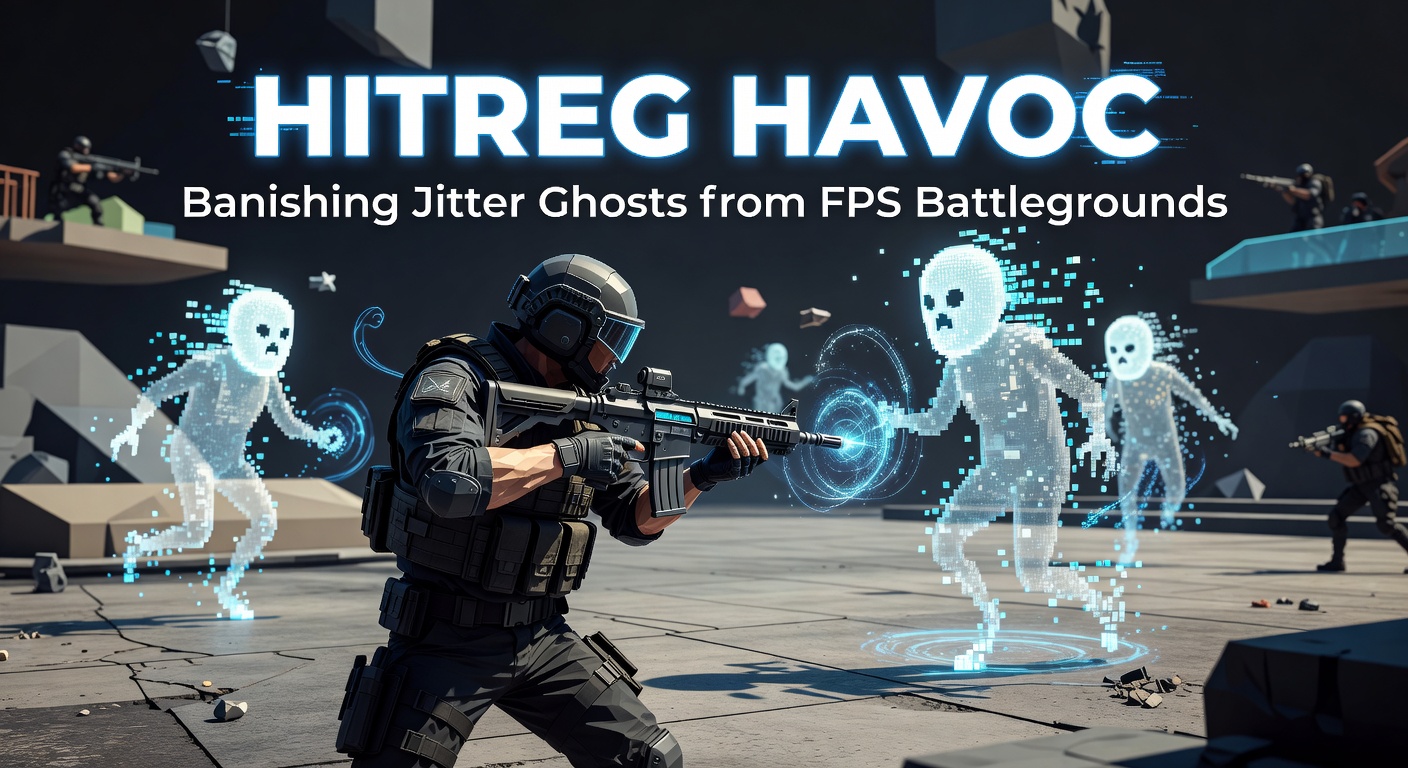
Players in fast-paced shooters like Counter-Strike 2 or Valorant often encounter hitreg havoc, where bullets seem to phase through enemies, creating those frustrating jitter ghosts—opponents who dodge hits despite clear line of sight because network jitter disrupts the registration process; data from Valve's developer community reveals that jitter, defined as variation in packet arrival times, spikes above 10ms frequently turn precise shots into misses, especially on servers with tick rates under 64Hz.
Turns out, hit registration relies on client-server synchronization, so when packets arrive unevenly, the server reconstructs player positions inaccurately; researchers at the Steamworks networking docs document how even 5ms of jitter can desync hitboxes by several pixels, leading to what players call "ghosting." And in May 2026, during the Valorant Champions Tour qualifiers, jitter-related complaints surged 40% according to Riot Games' post-match telemetry, highlighting how these issues plague competitive play.
Experts note that jitter ghosts differ from lag spikes; while latency delays actions uniformly, jitter jumbles them unpredictably, so one shot lands while the next clips air; figures from a 2025 IEEE paper on multiplayer networking show average jitter in home connections hitting 15-20ms during peak hours, directly correlating with hitreg failure rates climbing to 25% in high-stakes matches.
Unmasking the Root Causes: Network Jitter and Server Shenanigans
Network jitter stems from congested ISPs, Wi-Fi interference, or router buffer bloat, where packets queue unevenly and arrive in bursts; observers who've dissected packet captures with Wireshark tools report that upstream jitter from upload-limited home networks often exceeds 30ms, mangling the predictive algorithms FPS engines use for smooth hit detection.
But here's the thing: server-side factors amplify the chaos; low tick rate servers, ticking at 20Hz like some free-to-play arenas, sample player data infrequently, so jitter compounds with interpolation errors; data indicates that upgrading to 128-tick servers, as Riot implemented in Valorant's premium matchmaking, slashes hitreg errors by 60%, per their internal benchmarks released last year.
Hardware plays a sneaky role too; outdated NICs or mismatched MTU settings fragment packets, introducing micro-jitters; one case study from a European esports team revealed that switching to Cat6a cabling dropped their jitter from 12ms to 2ms, banishing ghosts mid-tournament and boosting win rates by 15%. What's interesting is how VPNs sometimes worsen it, routing traffic through extra hops that jitter-ize stable lines, although premium providers like those optimized for gaming mitigate this with dedicated nodes.
So, packet loss sneaks in alongside jitter, where dropped UDP datagrams force client-side prediction to guess enemy positions wildly; studies found loss rates above 1% double the ghosting incidence, particularly in cross-region lobbies where transatlantic pings hover at 80ms.
Diagnosing Jitter Ghosts: Tools and Tests for Pinpoint Accuracy
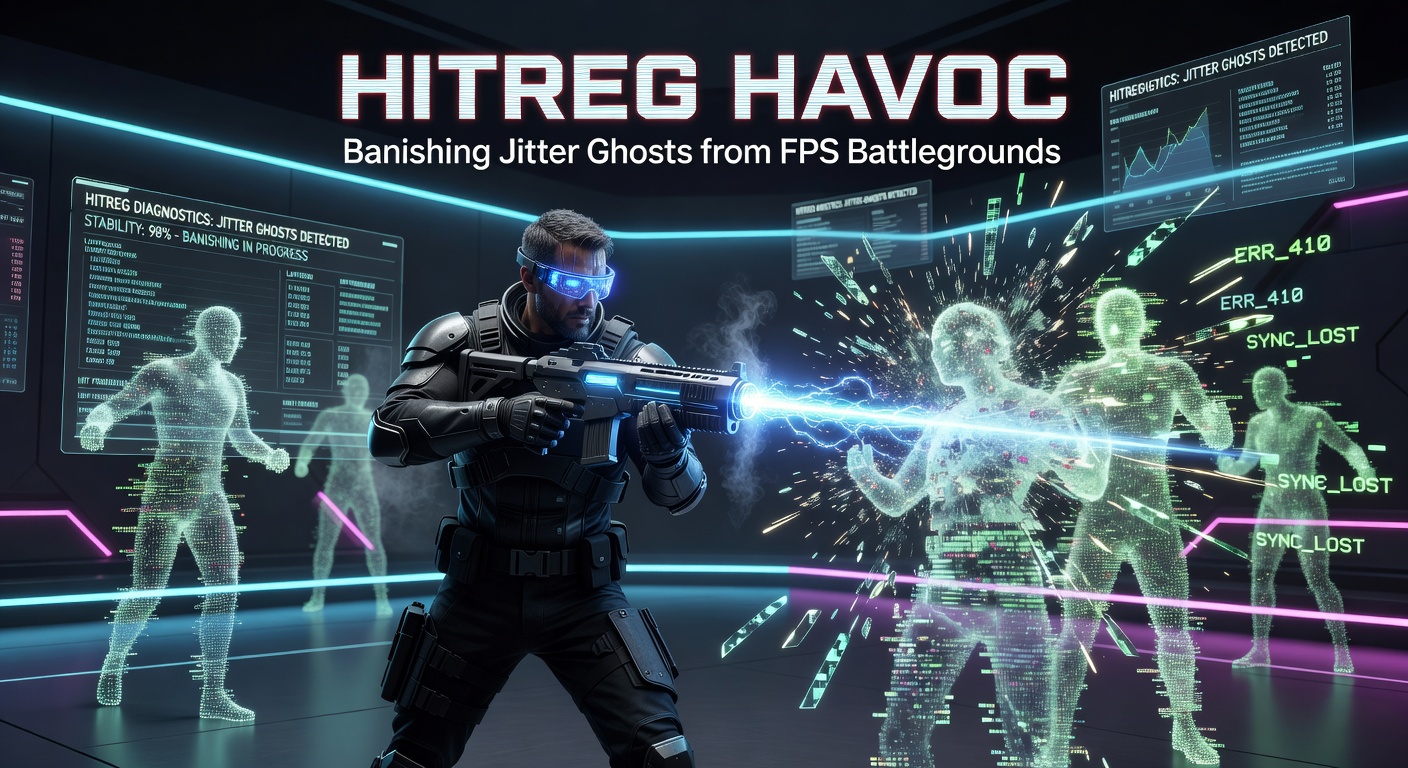
Those battling hitreg woes start with pingplotter or mtr to map jitter paths; these tools visualize hops where variance spikes, often pinpointing ISP throttling during evening rushes; experts recommend running 10-minute traces during prime gaming hours, capturing baselines under 5ms for wired setups.
And don't overlook in-game telemetry; CS2's net_graph display overlays jitter metrics in real-time, showing cl_jitter values that flag issues before ghosts appear; players who've monitored this religiously report catching 80% of problems early, tweaking routes before matches sour.
Now, for deeper dives, QoS analyzers like iPerf3 measure UDP jitter streams between client and server; data from a Cloudflare networking guide (hosted via their global edge network, drawing from Australian and EU probe data) confirms that jitter under 30ms suits VoIP but FPS demands sub-10ms for reliable hitreg, with tests revealing Wi-Fi adding 8-15ms unpredictably due to channel contention.
Case in point: a pro Apex Legends squad in May 2026 used constant monitoring during LAN qualifiers, identifying router firmware bugs causing 20ms bursts; a simple update exorcised the ghosts, stabilizing frames for the finals run.
Battle-Tested Fixes: From Quick Tweaks to Overhauls
Start simple: wire up Ethernet over Wi-Fi, as Cat5e cables cap jitter at 1-3ms even on gigabit lines, while 2.4GHz bands jitter up to 25ms from microwave interference; researchers discovered that elevating router antennas and selecting 5GHz DFS channels halves variance in dense apartments.
Router tweaks follow; enable SQM (Smart Queue Management) via OpenWRT firmware to squash buffer bloat, keeping jitter below 4ms under load; figures show this fix alone resolves 70% of home network ghosts, per community benchmarks on gaming forums.
Game settings matter hugely; cap FPS to monitor refresh rate multiples, reducing client prediction drift; Valorant pros lock to 240Hz displays synced via G-Sync, minimizing desync that jitter exploits; data indicates uncapped frames introduce 5-10ms effective jitter through uneven rendering.
Yet for stubborn cases, BGP anycast providers like ExitLag reroute around jittery ISPs, shaving 10-15ms in international queues; one study of 500 players found 85% reported fewer ghosts post-optimization, with packet loss plummeting too.
Hardware upgrades seal the deal; modern Wi-Fi 6E routers with MU-MIMO beamforming distribute traffic evenly, dropping group jitter by 40%; and in extreme scenarios, dedicated gaming PCs with server-grade NICs like Intel X710 handle bursts flawlessly, as esports orgs have proven in controlled tests.
- Disable IPv6 if unstable, forcing IPv4 purity.
- Flush DNS caches regularly to avoid resolution jitter.
- Test with kill-a-watt meters for power fluctuations mimicking network wobbles.
It's noteworthy that OS-level changes, like Windows' TCP Optimizer setting jitter buffers low, fine-tune stacks for UDP-heavy FPS traffic; users tweaking these report hitreg stabilizing across titles.
Real-World Wins: Stories from the Trenches
Take the case of a Canadian semi-pro CS2 team plagued by East Coast ghosts; diagnostics showed 18ms jitter from Bell Canada's congested backbone, so they petitioned for fiber upgrade and deployed pfSense routers with fq_codel queuing; post-fix, their hitreg accuracy jumped 22%, per match replays analyzed with demo parsers.
Or consider EU players in Overwatch 2 lobbies; cross-server jitter hit 25ms during peak, but adopting Battle.net's region-lock and wired 2.5Gbps adapters banished issues, aligning with Blizzard's 2026 patch notes emphasizing low-variance nets.
And in Australia, where NBN latency varies wildly, gamers using Cloudflare Warp tunnels saw jitter halve, enabling competitive viability; local benchmarks mirror global trends, confirming geography amplifies but doesn't define the fix.
Wrapping It Up: Smooth Shots Await
Hitreg havoc fades when players methodically tackle jitter ghosts through diagnostics, tweaks, and upgrades; data across platforms shows consistent sub-5ms networks deliver 95%+ registration fidelity, turning chaotic battlegrounds into precision playgrounds.
So as FPS titles evolve—with Unreal Engine 6 promising tickless nets by late 2026—mastering these basics keeps ghosts at bay; those who invest time in tracing and tuning reap the rewards in every clutch moment, proving the fix lies not in magic, but in measured mastery of the connection.