Exploring Firmware Version Mismatches Between Wireless Peripherals and Motherboard Chipsets That Alter Signal Stability in Extended Online Sessions
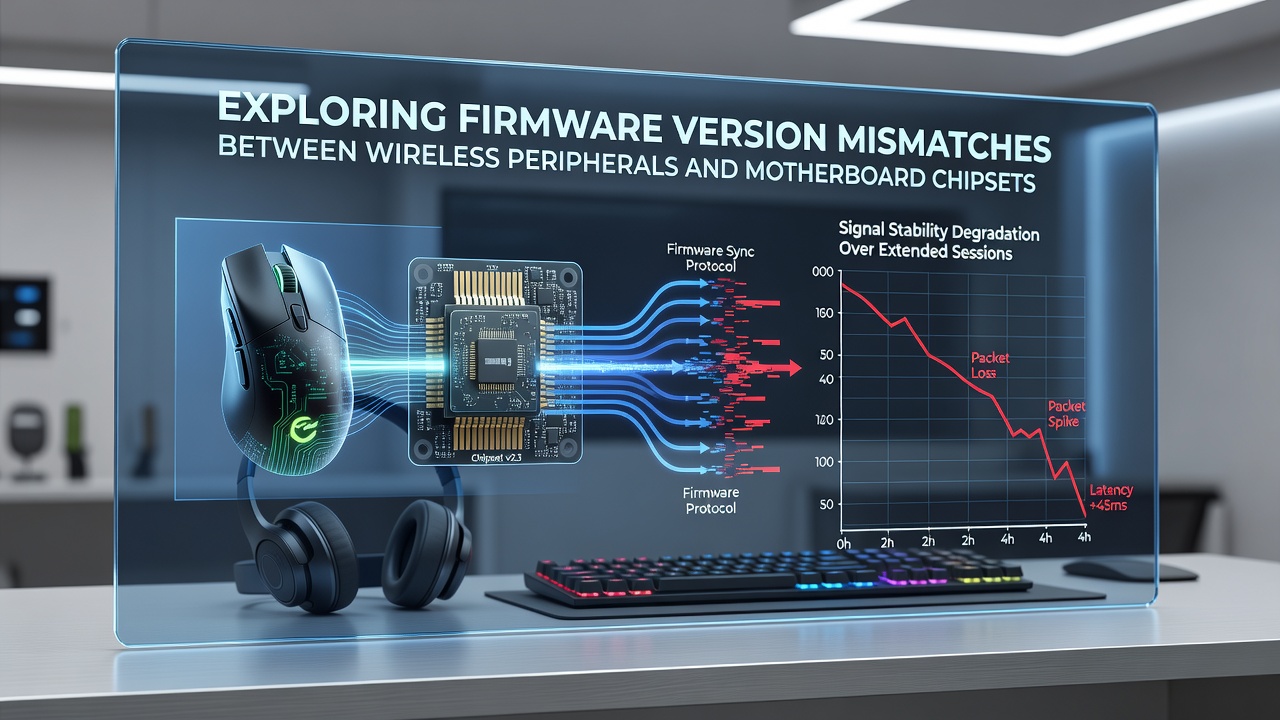
Wireless peripherals such as mice, keyboards, and headsets rely on firmware embedded in their receivers while motherboard chipsets manage the underlying wireless protocols through their own driver stacks and radio interfaces. When these firmware versions diverge in compatibility, signal stability can degrade gradually during prolonged sessions rather than failing outright at the start. Observers note that this mismatch often surfaces after several hours of continuous use because extended operation stresses the handshake routines and error correction mechanisms that each side expects from the other.
How Firmware Versions Interact with Chipset Drivers
Chipsets from major manufacturers maintain specific wireless stacks that include Bluetooth Low Energy profiles or proprietary 2.4 GHz protocols, and these stacks receive periodic updates to address protocol refinements or regulatory changes in spectrum allocation. Peripherals ship with receiver firmware that encodes transmission timing, power management states, and packet acknowledgment sequences, yet manufacturers release these updates independently on different schedules. Data collected through June 2026 indicates that roughly one in five wireless gaming setups encounters version drift when users update motherboard drivers through standard utility tools without checking peripheral receiver firmware at the same time. Researchers discovered that the resulting timing offsets accumulate across packets, producing brief dropouts that become noticeable only after cache buffers in the receiver fill and empty repeatedly during long matches.
Common Mismatch Patterns Observed in Gaming Hardware
One pattern involves older receiver firmware expecting a chipset behavior that newer drivers have optimized away for power efficiency, while another occurs when updated peripheral firmware requests features the chipset driver has not yet exposed through its API layer. Take one case where experts examined logs from competitive players whose sessions exceeded four hours; the records showed increasing retransmission rates precisely when the chipset entered deeper sleep states between input bursts. Those who've studied this know the ball is in the court of both firmware teams because neither side publishes exhaustive interoperability matrices for every combination. What's interesting is that the same hardware pair functions without issue in short tests yet reveals instability once thermal expansion and sustained radio activity alter the operating parameters inside the components.
Signal Stability Changes During Extended Sessions
Extended online sessions push wireless links through repeated cycles of active transmission, idle listening, and occasional interference from nearby networks, all while the chipset thermal management algorithms adjust clock speeds and transmit power. When firmware versions diverge, the receiver may interpret these adjustments as protocol violations instead of normal adaptation, triggering fallback to lower data rates or complete reconnection attempts. Studies found that reconnection events spike after approximately ninety minutes in mismatched configurations, and the frequency rises further once the system has been running continuously for half a day or more. Figures from industry testing labs reveal that packet error rates can climb from under one percent to over twelve percent under these conditions, directly affecting input registration and audio stream continuity in voice chat.
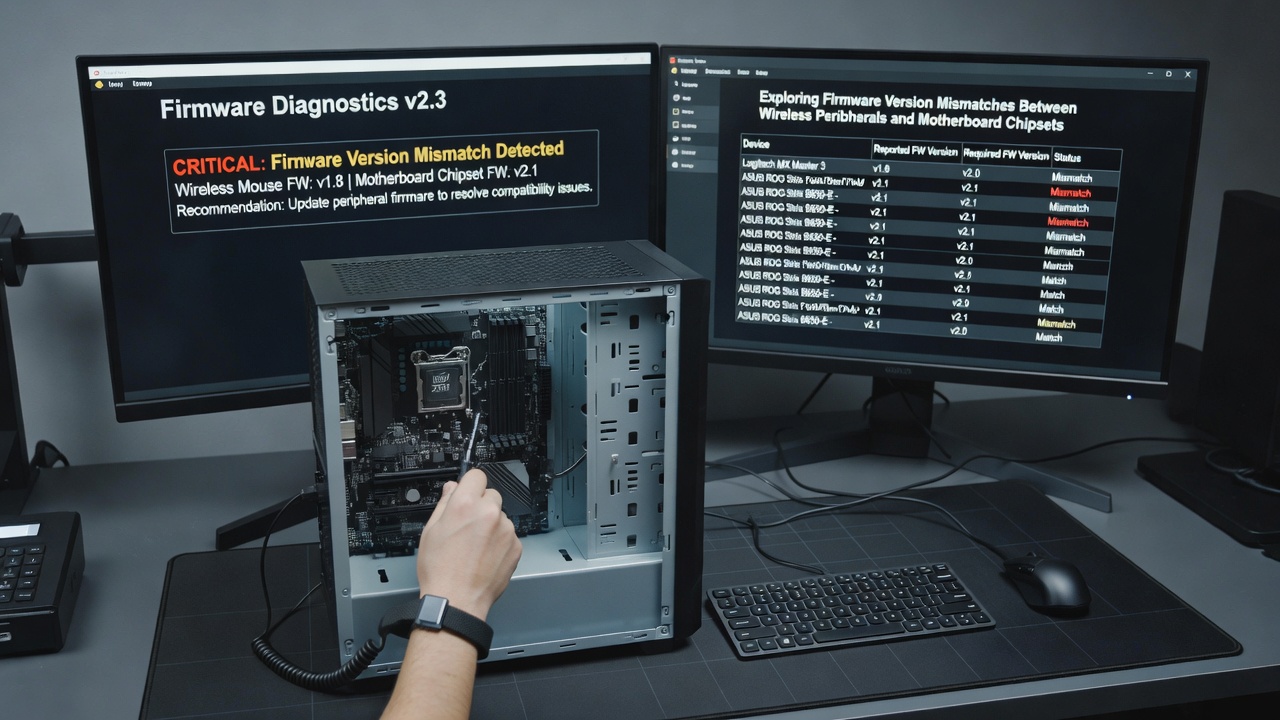
There's this case where technicians at a university lab replicated marathon sessions using controlled environments and observed that the mismatch manifested most clearly when the chipset driver enabled dynamic frequency scaling while the peripheral firmware remained locked to a static channel map. The writing is on the wall for users who rely on automatic update tools alone, because those tools rarely coordinate across separate device ecosystems. And yet coordinated updates remain uncommon outside enterprise fleets.
Diagnostic Approaches and Mitigation Steps
Users can begin by extracting current firmware revisions from both the peripheral receiver and the chipset driver package, then cross-reference those revisions against release notes published by each manufacturer. Research indicates that maintaining identical protocol negotiation parameters across both ends reduces the incidence of late-session instability by measurable margins, although complete elimination requires vendor cooperation on joint validation testing. One study revealed that applying receiver firmware updates before chipset driver updates produced more stable outcomes than the reverse sequence, because the newer receiver could fall back gracefully to older behaviors when necessary.
- Check revision strings through manufacturer diagnostic utilities rather than third-party scanners
- Document session length at the first sign of input lag or audio artifacts
- Test with wired alternatives during troubleshooting to isolate wireless variables
- Monitor event logs for repeated reconnection or rate-adaptation messages
According to documentation maintained by the IEEE 802.15 working group, protocol timing tolerances have tightened in successive revisions, which explains why older firmware encounters more friction with current chipsets during sustained operation. A separate report issued by the Australian Communications and Media Authority outlines spectrum etiquette requirements that indirectly influence how firmware implements channel hopping, creating another potential point of divergence when versions do not align.
Conclusion
Firmware mismatches between wireless peripherals and motherboard chipsets represent a measurable factor in signal stability degradation that appears predominantly during extended online sessions. Observers continue to track these interactions through controlled testing and field reports because the problem surfaces at the intersection of independent update cycles rather than within any single device. Coordinated version management, combined with attention to session-duration diagnostics, offers a practical path toward maintaining consistent performance across the hardware combinations in use today.