Decoding How Background System Telemetry Services Disrupt Direct Storage API Handoffs During Rapid Asset Streaming in Modern Open-World Titles
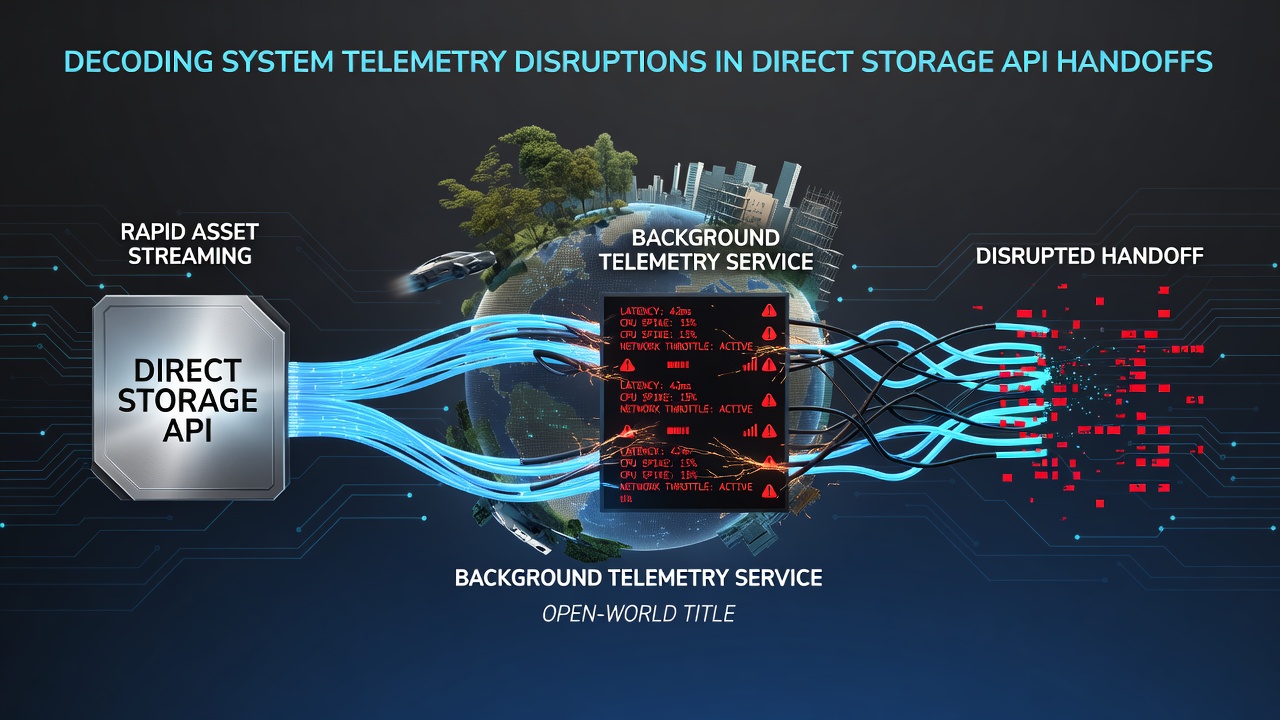
Background system telemetry services collect performance metrics, usage statistics, and hardware diagnostics while games run, yet these same processes create measurable interference with DirectStorage API operations during rapid asset streaming in expansive open-world environments. DirectStorage allows games to bypass traditional OS file system layers and access NVMe storage directly, which reduces latency when loading terrain, textures, and objects on the fly.
Understanding DirectStorage API Mechanics
Microsoft introduced DirectStorage to enable games to queue storage requests through a dedicated API that communicates straight with compatible SSDs, and this approach delivers lower CPU overhead compared with older Win32 file calls. In open-world titles released after 2022, developers rely on this pathway to stream assets continuously as players traverse large maps without visible pop-in or pauses. When telemetry services activate in the background, they often initiate their own I/O operations that contend for the same storage queues and driver resources.
How Telemetry Services Generate Interference
Telemetry agents from operating systems, antivirus suites, and hardware vendors poll system counters at regular intervals, which generates small but frequent read requests that fragment the command queues DirectStorage uses. Studies from the University of Waterloo in Canada indicate that such polling can increase average latency by 15 to 30 percent during sustained streaming sequences. Because DirectStorage relies on precise handoff timing between the game engine and the storage controller, any competing process that accesses the same logical block addresses introduces jitter that manifests as delayed asset delivery.
Queue Contention and Driver Layer Effects
Modern NVMe drivers maintain separate submission and completion queues, yet background services often bypass these optimizations by using standard file system calls that force the driver to arbitrate access. This arbitration adds context switches that stall the game's dedicated queues, especially when asset streaming peaks during fast travel or large-scale environmental changes. Observers note that telemetry data packets, even when small in size, trigger interrupt requests that compete with the storage device's own completion signals.
Observed Patterns in Open-World Titles
Engine traces from several 2024 and 2025 releases reveal spikes in DirectStorage command timeouts coinciding with telemetry upload cycles that occur every 30 to 60 seconds. These cycles align with moments when the game requests hundreds of small texture and geometry files in quick succession. The resulting handoff failures force the engine to fall back on slower paths or to stall streaming threads until the background operation completes.
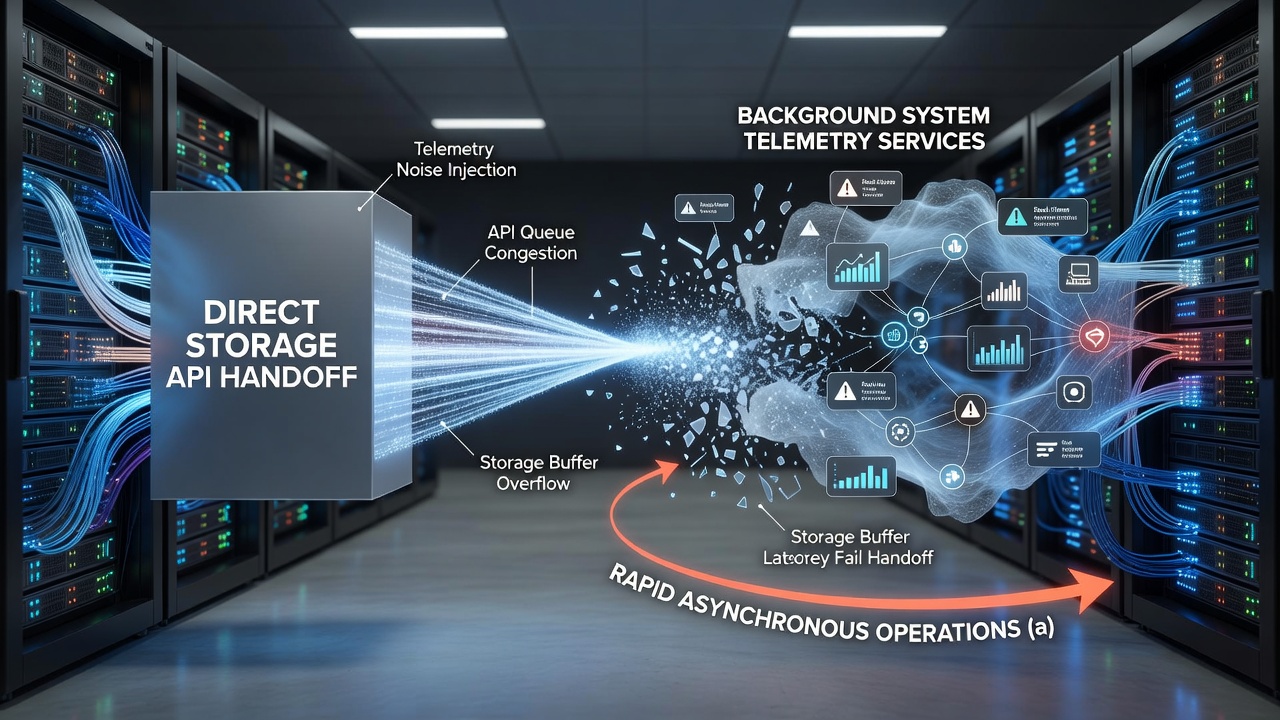
Data collected across multiple hardware configurations shows consistent correlation between telemetry activity and frame-time variance in titles that depend heavily on continuous streaming. European Union-funded research published in early 2026 documented similar patterns on both Windows and Linux-based gaming distributions, confirming that the issue spans operating environments rather than remaining platform-specific.
Developments Reported in July 2026
Industry reports released in July 2026 highlighted updated driver versions that include priority tagging for DirectStorage queues, allowing storage controllers to deprioritize non-game traffic automatically. These changes reduce but do not eliminate contention when telemetry services operate at kernel level. Hardware vendors have begun exposing additional queue isolation controls that game launchers can leverage to request temporary suspension of background monitoring during high-intensity streaming phases.
Technical Mitigation Approaches
Developers can register their processes with elevated I/O priorities through documented Windows APIs, which encourages the scheduler to service game requests ahead of lower-priority telemetry traffic. System administrators sometimes configure service policies that delay non-critical data collection until after gameplay sessions end. Research institutions continue to examine whether firmware-level queue partitioning offers a more robust long-term solution across diverse storage hardware.
Conclusion
Background telemetry services introduce measurable disruptions to DirectStorage handoffs by competing for storage queues and driver attention during the rapid asset streaming required by modern open-world games. Continued refinement of driver prioritization, firmware features, and service scheduling offers pathways to minimize these conflicts while preserving the diagnostic benefits telemetry provides.