Deciphering Capacitor Degradation Patterns That Influence Power Stability Across Aging Gaming Hardware Configurations
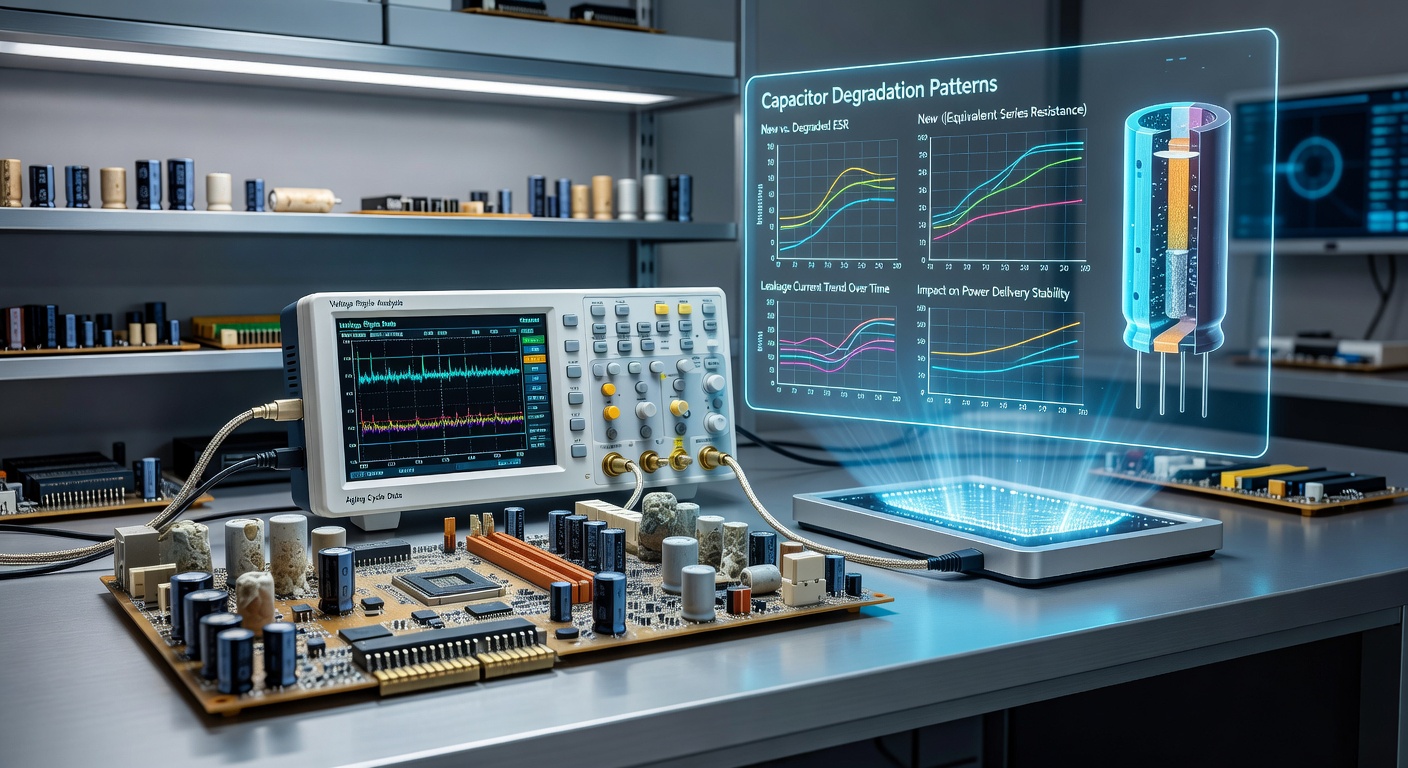
Capacitors serve as essential components in power delivery networks for gaming hardware where they filter voltage ripples and maintain stable current flow to processors and memory modules. Over extended periods these electrolytic and solid-state units undergo chemical and physical changes that alter their performance characteristics in measurable ways. Researchers track patterns such as increased equivalent series resistance alongside reduced capacitance values that emerge gradually across consumer electronics used for extended gaming sessions.
Primary Degradation Mechanisms in Gaming Setups
Heat exposure accelerates electrolyte evaporation in aluminum capacitors while high ripple currents from demanding graphics loads promote internal gas buildup and eventual venting. Observers note that motherboard voltage regulator modules experience these effects first in tower configurations because proximity to CPU sockets generates sustained thermal stress. Data from long-term monitoring programs shows solid polymer capacitors maintain better stability than traditional wet types yet still develop microcracks in their dielectric layers after five to seven years of daily operation.
Power stability issues surface when degraded units fail to suppress transient spikes during sudden load changes like those occurring in open-world titles or competitive multiplayer matches. Voltage droops can trigger throttling in graphics cards while overvoltages risk damaging sensitive silicon in older console motherboards. Studies conducted through 2025 indicate that systems running above 60 degrees Celsius average case temperatures exhibit degradation rates up to three times faster than those maintained in cooler environments.
Detection Approaches Used by Technicians
Visual inspection reveals outward signs including domed tops on cylindrical capacitors or discolored electrolyte residue around component bases. Technicians apply multimeters in capacitance mode to compare measured values against printed ratings while in-circuit ESR meters provide quick assessments without full disassembly. Advanced users connect oscilloscopes across power rails to capture ripple waveforms that exceed acceptable thresholds once capacitors lose effectiveness.
Software-based monitoring tools log voltage sensor data over time and flag deviations that correlate with hardware age. One research initiative at a European technical institute compiled datasets from thousands of retired gaming rigs and identified consistent thresholds where instability begins to appear. These thresholds vary by platform yet follow predictable trajectories tied to usage hours and thermal history.
Configuration-Specific Patterns Across Hardware Types
Desktop PCs with discrete graphics cards display pronounced effects on 12-volt rails feeding GPU power circuits because high transient demands expose weaknesses faster than in integrated graphics setups. Laptop configurations suffer additional stress from compact layouts that limit airflow while battery charging circuits add further ripple that compounds capacitor wear. Console hardware such as aging PlayStation and Xbox units shows degradation concentrated around power input stages where external adapters introduce variable loads over years of intermittent use.
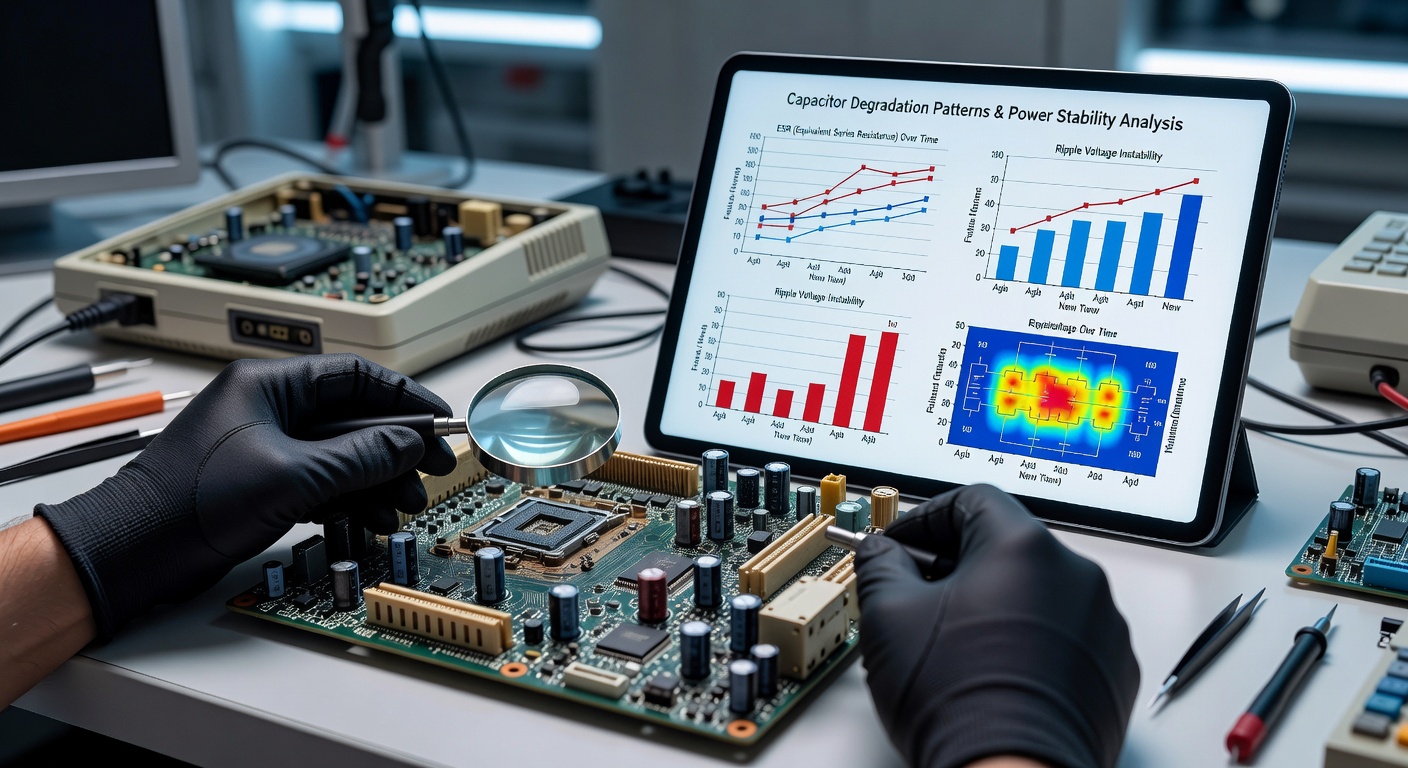
Multi-GPU arrangements place extra demands on shared power delivery paths and researchers have documented accelerated failure sequences in systems running paired high-end cards for extended periods. Data collected as recently as May 2026 continues to highlight how mixed hardware generations within the same chassis create uneven stress distributions that hasten localized capacitor aging.
Contributing Environmental and Operational Factors
Humidity levels influence corrosion rates on capacitor leads while dust accumulation restricts cooling and raises internal temperatures. Frequent power cycling introduces mechanical stress through repeated expansion and contraction cycles inside component housings. Industry reports from organizations such as the IEEE emphasize that gaming hardware subjected to 24-hour operation cycles reaches critical degradation points earlier than units powered down regularly.
Power supply units themselves contain large filtering capacitors whose condition directly affects downstream stability. Replacement of these units often restores performance when original capacitors have aged beyond functional limits yet many users overlook this connection until crashes become frequent. Preventive replacement schedules based on runtime logs help maintain consistent operation according to findings from Australian electronics reliability programs.
Conclusion
Capacitor degradation follows identifiable trajectories shaped by thermal electrical and temporal variables that collectively determine power delivery reliability in aging gaming hardware. Systematic monitoring combined with timely component replacement allows continued stable operation across diverse configurations. Ongoing data collection through 2026 refines predictive models that help users anticipate stability shifts before they manifest as performance interruptions.