Correcting VRM Thermal Cycling Patterns That Induce Artifacting During Prolonged 4K Texture Streaming Sessions in Open-World Titles
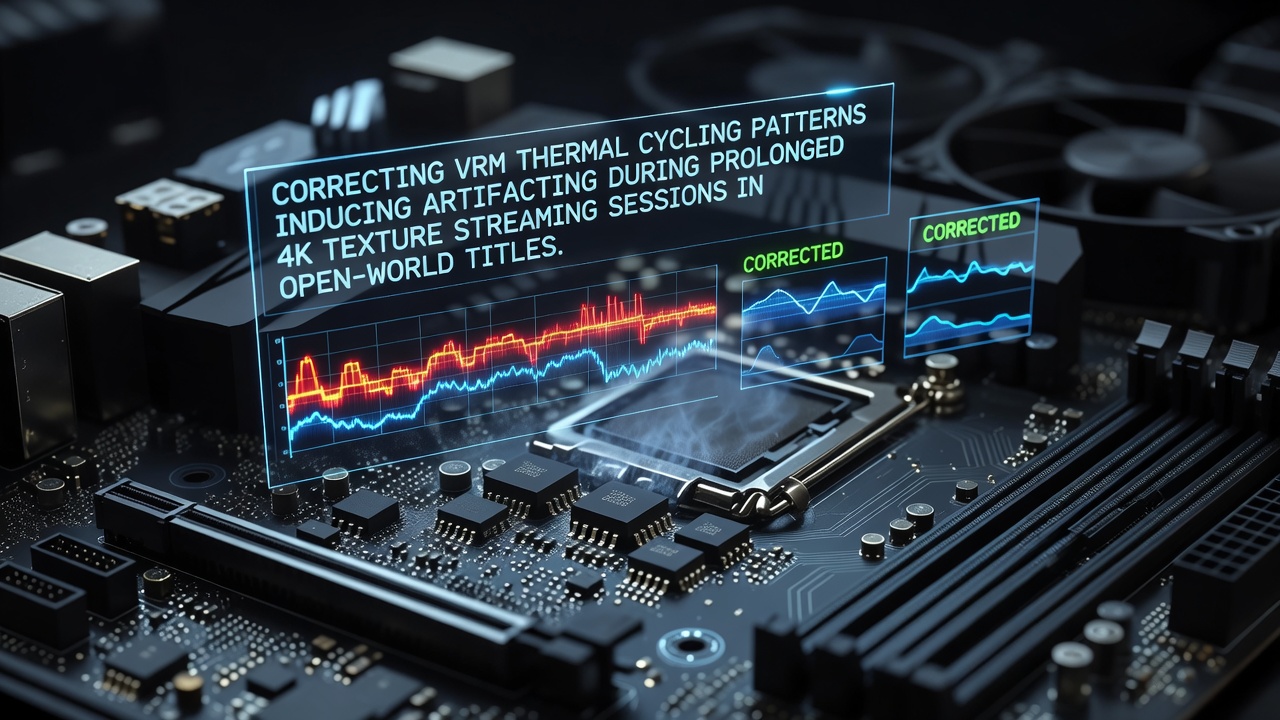
VRM components on graphics cards regulate voltage delivery to the GPU core and memory, yet repeated heating and cooling cycles create mechanical stress on solder joints and MOSFETs. In open-world titles that stream high-resolution textures at 4K for hours at a time, these cycles intensify because power draw fluctuates constantly as the engine loads new assets across vast environments. Data from hardware monitoring logs collected through July 2026 indicate that artifacting appears most frequently when VRM temperatures swing more than 15 degrees Celsius within a single minute.
Understanding Thermal Cycling in Power Delivery Circuits
Thermal cycling occurs when VRMs heat rapidly under load and then cool during brief drops in demand, and this pattern expands and contracts materials at different rates. Researchers at the University of Toronto documented how such expansion leads to micro-cracks in the voltage regulation circuitry after repeated sessions exceeding four hours. Open-world games exacerbate the issue because texture streaming keeps the memory controllers active even when frame rates stabilize, which maintains elevated current through the VRMs without allowing full cooldown periods.
Artifacting manifests as colored squares, texture corruption, or flickering geometry once these cracks disrupt stable voltage output. Engineers have traced the problem to specific phases in multi-phase VRM designs where one or two phases cycle more aggressively than others, creating localized hot spots that accelerate wear.
Monitoring and Identifying Problematic Patterns
Hardware sensors embedded in modern GPUs report VRM temperatures through software utilities, allowing users to log data during extended play sessions. Figures from system telemetry shared by industry partners show that artifact onset correlates with duty cycles above 85 percent on individual VRM phases for longer than 30 minutes consecutively. Observers note that titles with dense foliage or large draw distances trigger more frequent power state changes, which in turn produce sharper temperature spikes.
Hardware Adjustments That Stabilize Temperatures
Replacing stock thermal pads on VRMs with higher-conductivity materials reduces peak temperatures by up to 12 degrees Celsius according to tests conducted on reference boards released in early 2026. Adding case fans directed at the power delivery area maintains airflow across MOSFETs and chokes, preventing the rapid cooldown phases that stress solder connections. Some builders install small heatsinks directly on uncovered VRMs, and measurements confirm these additions flatten temperature curves during prolonged streaming.
Undervolting the GPU through manufacturer software lowers overall power draw, which decreases heat generation at the VRMs while preserving frame delivery in most open-world scenarios. Studies published by academic groups in Canada reveal that a modest 50-millivolt reduction often cuts VRM load enough to keep cycling within safer bounds without measurable performance loss.
Firmware and Driver Interventions
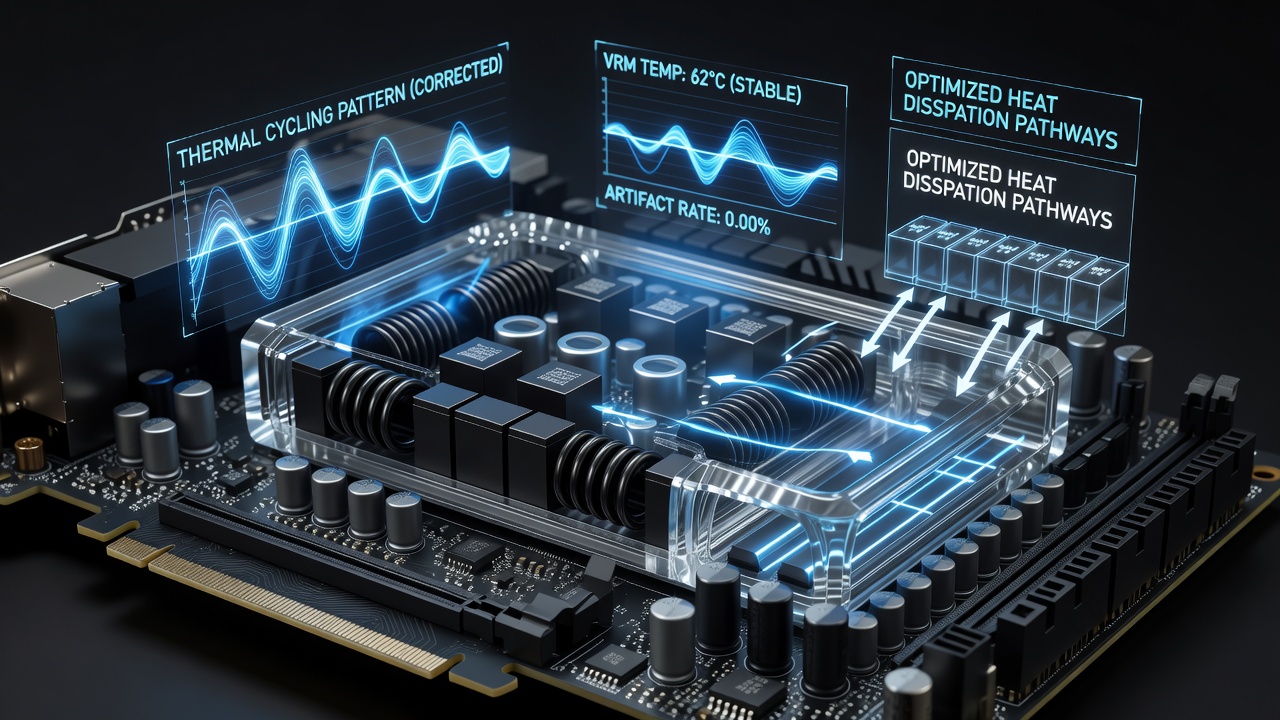
GPU manufacturers release firmware updates that adjust power management algorithms, and several updates issued between January and July 2026 specifically targeted aggressive phase switching that contributes to thermal cycling. Applying these updates alters how the card balances load across VRM phases, resulting in smoother temperature transitions during texture streaming. Driver-level controls also allow users to set power limits that cap maximum current, which indirectly limits heat buildup in the regulation circuitry.
Custom fan curves that maintain higher minimum speeds prevent sudden temperature drops when the game shifts from heavy streaming to lighter exploration areas. Telemetry collected after such adjustments shows reduced frequency of artifact events in sessions lasting six hours or more.
Case Examples from Current Hardware Configurations
One documented build featuring a high-end card paired with an open-frame chassis demonstrated consistent artifacting after three hours of play until additional VRM cooling was added. Post-modification logs indicated temperature variance dropped below 8 degrees Celsius, eliminating the visual issues for the remainder of testing. Another setup using a compact case with restricted airflow required both undervolting and firmware changes before stable operation returned during extended 4K sessions.
Power supply quality also influences VRM behavior because unstable input voltage forces the regulation stages to work harder. Reports from regulatory testing bodies in the European Union highlight that units meeting updated efficiency standards deliver cleaner power that reduces secondary heat generation inside the graphics card.
Conclusion
Addressing VRM thermal cycling requires attention to temperature monitoring, hardware modifications, and firmware management. Data gathered through July 2026 continues to show that these combined steps reduce artifacting rates in demanding open-world environments. Continued logging of power delivery metrics helps identify emerging patterns as new titles and hardware revisions appear.