Channel Congestion Effects on Patch Download Reliability in Household Gaming Setups
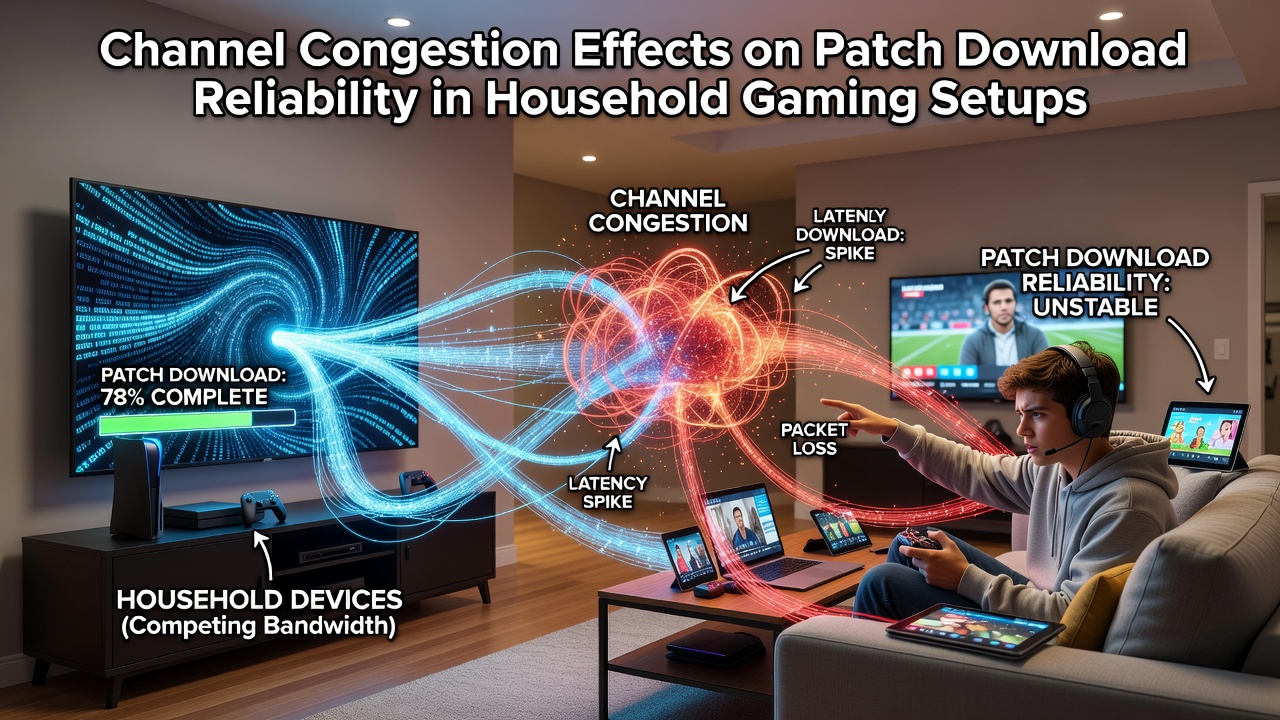
Channel congestion occurs when multiple wireless networks operate on the same frequency bands within close proximity, which creates interference that disrupts data transmission for connected devices. In household gaming setups this interference directly impacts the reliability of large patch downloads that game platforms release on a regular basis. Data from network monitoring tools shows that households with several active devices experience slower transfer rates and higher packet loss during evening hours when neighboring networks also see heavy use.
Understanding Wireless Channel Overlap in Residential Areas
Modern routers default to automatic channel selection yet crowded neighborhoods often force multiple access points onto the same channels in both 2.4 GHz and 5 GHz bands. Observers note that 2.4 GHz bands suffer more because only three non-overlapping channels exist while 5 GHz offers more options but shorter range leads some households to fall back on lower bands. Research indicates that game patches averaging 20 to 50 gigabytes become vulnerable when signal-to-noise ratios drop below acceptable thresholds during simultaneous device activity.
Households with multiple gamers frequently report interrupted downloads that require restarts or resume at reduced speeds after pauses. Those who've studied home network logs find that congestion spikes align with prime-time streaming and online play across several apartments in the same building. According to measurements collected by independent researchers, download completion times can double or triple when channel utilization exceeds 70 percent for extended periods.
Impact on Game Update Processes
Game distribution services rely on stable connections to deliver incremental updates without corruption yet channel interference introduces retransmissions that fragment the process. Figures reveal that reliability drops further in homes where smart home devices and mobile phones compete for bandwidth alongside gaming consoles and PCs. One study revealed that patch verification steps fail more often under these conditions because corrupted segments trigger repeated server requests that compound the congestion.
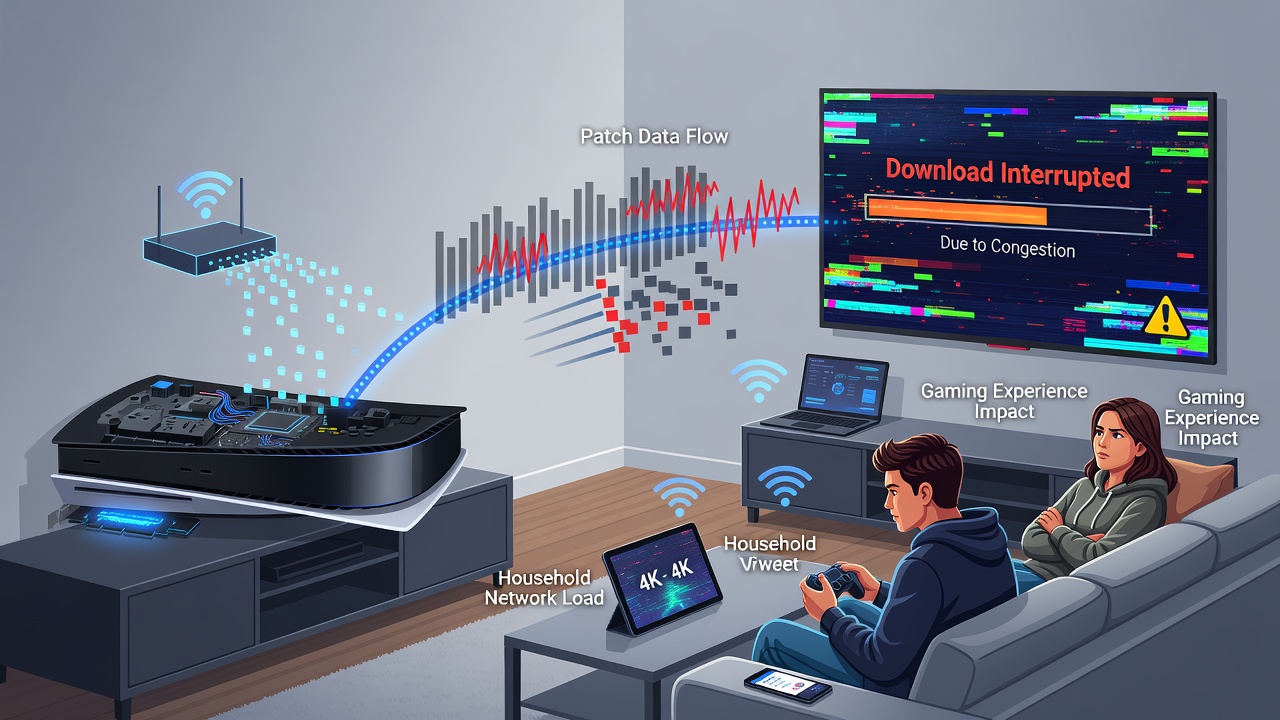
Technicians who analyze router diagnostics observe that 5 GHz channels provide better throughput when clear yet walls and distance push some gaming hardware onto congested 2.4 GHz alternatives. Data shows this shift happens automatically in many consumer devices and leads to unpredictable download behavior during peak usage. As of July 2026 network equipment manufacturers have released firmware updates that include improved channel scanning but adoption rates vary across different router models.
Household Factors That Worsen Congestion
Multiple wireless devices operating simultaneously create self-inflicted interference inside the home while external networks add further pressure on shared spectrum. People often find that placing routers near windows or in central locations reduces some overlap but does not eliminate it in dense urban settings. Reports from regulatory bodies such as the Federal Communications Commission document rising complaints about residential spectrum crowding in recent years.
Wireless mesh systems and range extenders sometimes help redistribute traffic yet they can also propagate congestion if channels are not manually tuned. Evidence suggests that households using wired backhaul for secondary access points maintain more consistent download performance during game updates. Researchers discovered that simple changes like scheduling downloads for off-peak hours reduce failure rates without requiring hardware upgrades.
Measurement and Monitoring Approaches
Network analysis software provides visibility into channel utilization and allows users to identify less crowded frequencies for manual configuration. Studies conducted by academic institutions including those affiliated with Canadian research centers demonstrate that consistent monitoring leads to measurable improvements in transfer reliability over time. Observers note that tools built into modern operating systems offer basic channel information while third-party applications deliver deeper interference mapping.
Patch download clients from major platforms include retry mechanisms that mitigate some effects of congestion but prolonged interference still causes session drops. Data collected across large user bases indicates that failure rates correlate strongly with local network density rather than server-side issues alone.
Conclusion
Channel congestion remains a persistent variable in household gaming environments where multiple networks share limited spectrum. Measurements and reports confirm that download reliability for game patches declines when interference rises yet targeted configuration adjustments and timing strategies can offset many of the resulting interruptions. Continued development of router firmware and spectrum management tools offers pathways to more stable performance as residential wireless usage grows.