Calibrating Motherboard VRM Phases to Stabilize Power Delivery During Extended Overclocked CPU Sessions in Strategy Titles
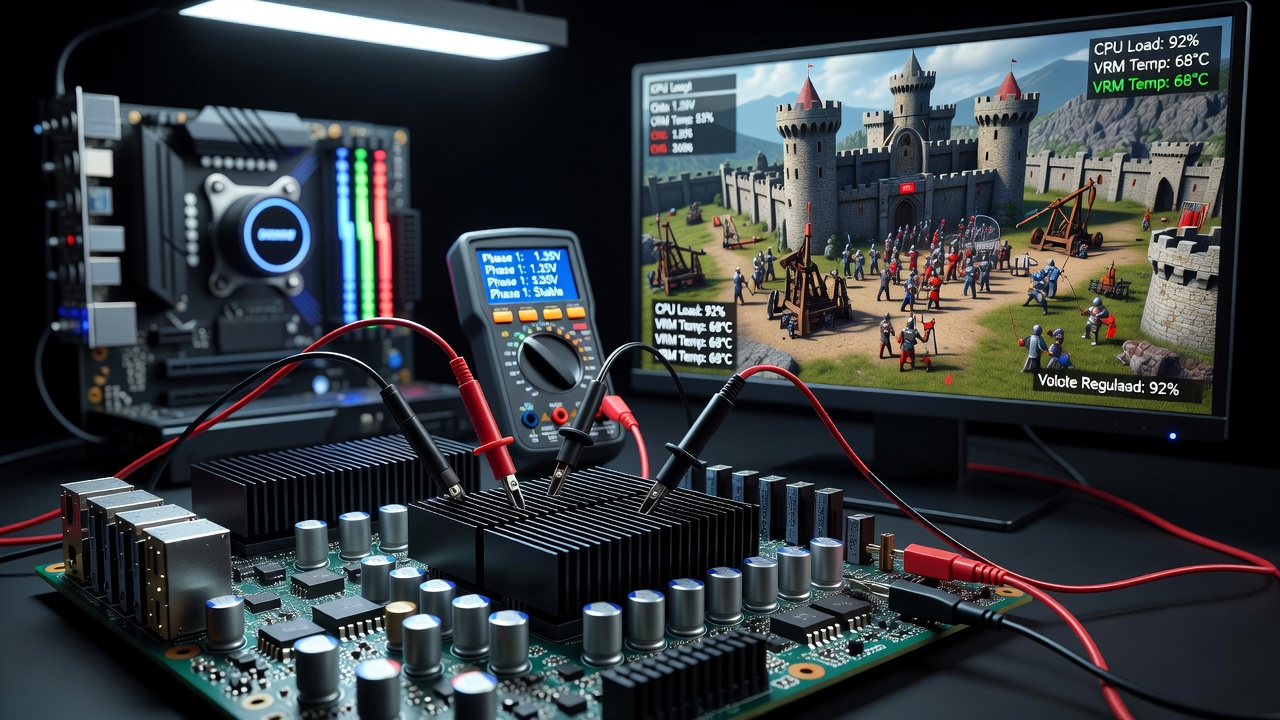
Strategy titles place sustained computational demands on central processors during extended campaigns, and overclocked configurations amplify voltage requirements across multi-hour sessions. Motherboard voltage regulator modules manage these loads through discrete power phases that distribute current to the CPU socket, while calibration adjusts phase count, switching frequency, and load line calibration settings to maintain consistent delivery under variable workloads.
Understanding VRM Architecture and Phase Distribution
Motherboards implement voltage regulation through interleaved buck converter stages, each phase handling a portion of the total current demand, and higher phase counts reduce thermal stress on individual components during prolonged high-load periods common in turn-based or real-time strategy games. Data from hardware testing indicates that configurations with eight or more phases exhibit lower ripple voltage compared to four-phase designs when processors operate above stock frequencies, according to measurements compiled by industry research groups.
Calibration begins in the UEFI firmware interface where users access settings labeled phase control, doubler modes, or power phase response, and these adjustments allow the controller to activate additional stages dynamically rather than relying on fixed patterns that leave some phases idle during moderate loads. Observers note that mismatched phase calibration often leads to uneven heating across the VRM heatsink array, which becomes noticeable after several hours of continuous gameplay in titles that maintain elevated CPU utilization.
Impact of Overclocking on Power Stability Requirements
Overclocked processors draw increased current at elevated voltages, which places greater emphasis on phase synchronization and transient response times within the VRM circuitry, and strategy games frequently alternate between intense calculation bursts during battles and lighter map-processing intervals that still keep core utilization above baseline levels. Research from academic institutions in Canada shows that uncalibrated VRMs can experience voltage droop exceeding 50 millivolts under sustained loads exceeding 150 watts, potentially triggering protection circuits that halt execution mid-session.
Load line calibration settings modify how aggressively the controller compensates for voltage drop under load, with options typically ranging from level 1 through level 8 or auto modes, and higher calibration values maintain tighter voltage regulation at the expense of increased heat generation in the MOSFETs and chokes. Those who have examined long-duration benchmarks report that proper calibration reduces the frequency of unexpected resets that occur when power delivery falls outside CPU-specified tolerances during extended strategy sessions.
Practical Calibration Procedures and Monitoring Tools
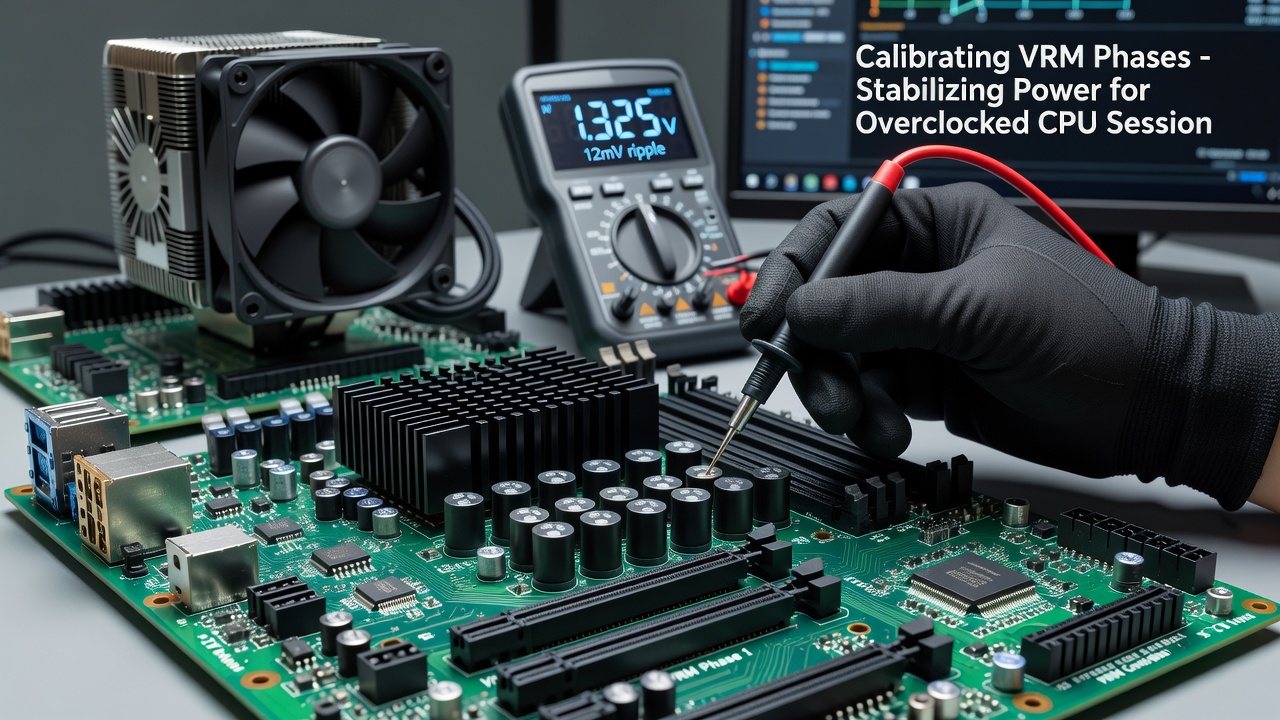
Technicians recommend starting with manufacturer default phase settings before incrementally enabling additional phases through the power delivery submenu, then validating stability with stress applications that simulate the mixed load patterns found in strategy gameplay. Monitoring software tracks per-phase current distribution and temperature readings, revealing whether the controller activates stages evenly or leaves some underutilized during extended runs.
Switching frequency adjustments alter how quickly each phase responds to demand changes, and values between 300 and 500 kilohertz balance efficiency against electromagnetic interference that can affect nearby circuitry. Figures from European electronics standards bodies indicate that optimized frequencies reduce overall system noise while preserving the rapid transient response needed when processors shift between idle map views and full-calculation combat sequences.
Testing protocols often combine multi-threaded workloads with periodic pauses to replicate the ebb and flow of strategy sessions, and repeated cycles expose whether phase calibration holds across temperature increases that occur after the first hour of operation. In July 2026, updated firmware releases from several motherboard vendors incorporated refined phase interleaving algorithms that respond more precisely to sustained loads above 200 watts.
Common Issues and Adjustment Strategies
Insufficient phase activation during overclocked operation manifests as throttling or sporadic instability after prolonged play, whereas overly aggressive settings can produce audible coil whine or accelerated component aging in the power circuitry. Observers note that strategy titles running on overclocked platforms benefit from calibration profiles that prioritize even phase utilization over maximum frequency response, since these games rarely exhibit the spiky load changes seen in other genres.
Users adjust doubler configurations to expand effective phase count without adding physical hardware stages, and software utilities provide real-time graphs that confirm whether the VRM controller distributes current across all available phases during continuous high-utilization periods. Research indicates that balanced distribution correlates with lower peak temperatures on individual MOSFETs, extending operational stability windows in long sessions.
Conclusion
Calibrating VRM phases involves systematic adjustment of controller parameters to match the sustained power demands of overclocked processors in strategy environments, and consistent application of these techniques supports uninterrupted operation across multi-hour campaigns. Monitoring data and firmware refinements continue to refine how motherboards allocate power stages under variable loads, providing measurable improvements in voltage stability for users who maintain elevated CPU frequencies during extended gameplay.