Addressing PWM Signal Interference Patterns Between Case Fans and Motherboard Headers That Induce Vibration Artifacts in Densely Packed Gaming Chassis
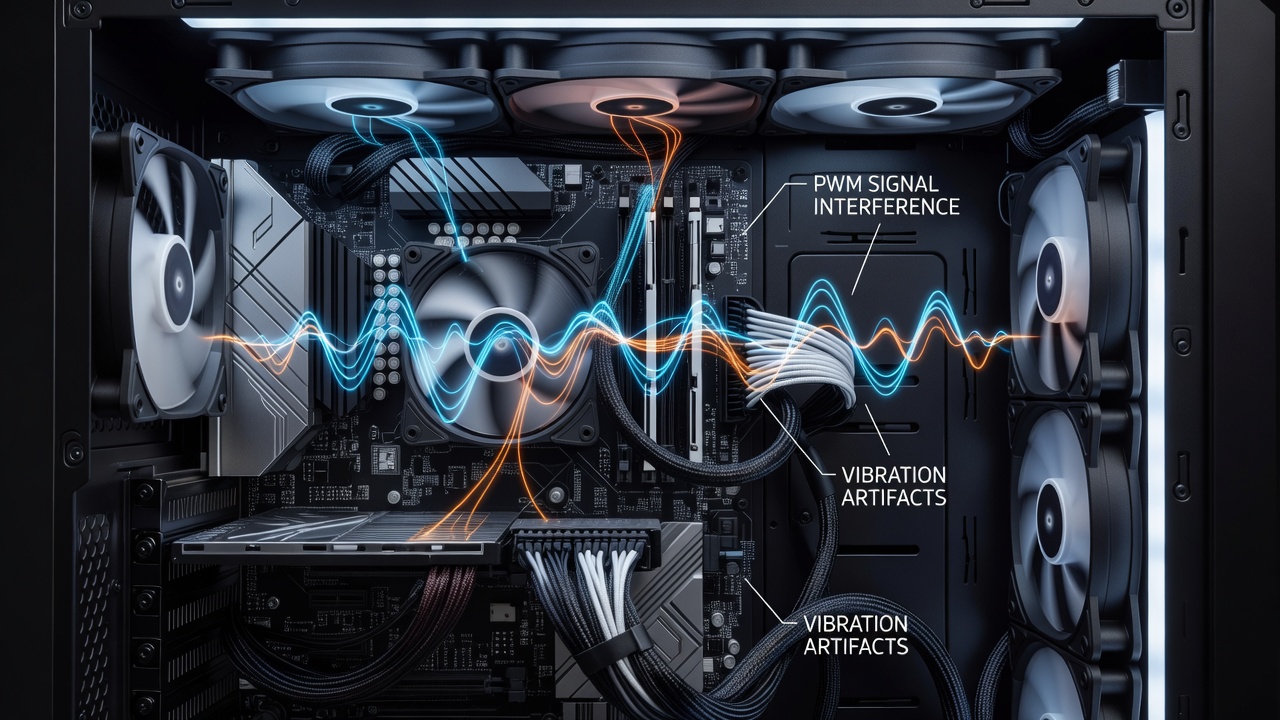
Case fans controlled through pulse width modulation connect to motherboard headers that deliver precise speed signals yet these connections sometimes generate interference when multiple fans operate in close proximity within compact gaming builds. Engineers measure signal noise on the PWM line as square wave pulses interact with electrical traces and adjacent wiring and this noise can cause irregular fan motor responses that translate into physical vibrations transmitted through the chassis frame.
Signal Mechanics in Fan Control Systems
Motherboard headers output PWM signals at frequencies typically between 20 kHz and 25 kHz to regulate fan speeds while the fan itself contains a small controller chip that interprets duty cycle changes and adjusts motor power accordingly. When several fans share the same header through splitters or when cables run parallel to other power lines the shared ground path and capacitive coupling allow stray signals to distort the intended waveform and observers note that vibration increases when duty cycles fluctuate rapidly during temperature based adjustments.
Common Interference Sources in Dense Layouts
Researchers document several physical factors that amplify these patterns in gaming chassis packed with components. Short cable runs between headers and fans reduce some resistance yet tight bends and proximity to GPU power cables introduce additional inductance while metal side panels reflect electromagnetic fields back into the wiring harness and tests conducted on multiple mid-tower cases reveal that fan motors operating near 40 percent duty cycle produce the strongest harmonic spikes on the PWM line.
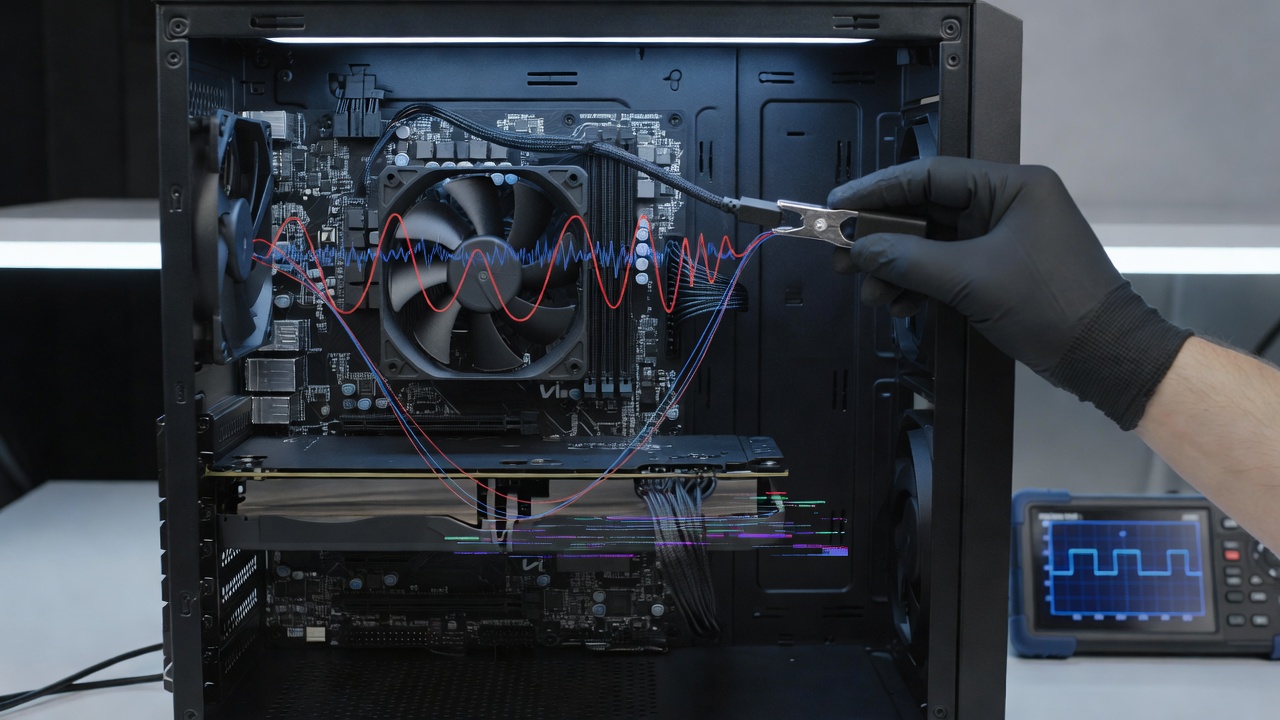
Data collected from oscilloscope measurements shows voltage overshoot on the signal wire reaching up to 15 percent above nominal levels when three or more fans connect through a single header and these spikes trigger the fan controller to misinterpret the intended speed command leading to brief motor speed changes that manifest as audible resonance through the chassis structure.
Measurement and Detection Methods
Technicians employ spectrum analyzers and vibration sensors to isolate the exact frequencies where PWM artifacts appear and they compare baseline readings taken with fans disconnected against full load configurations to identify the contribution of each header. One study from an academic electronics laboratory tracked vibration amplitude across different chassis densities and found that configurations with fans mounted less than 15 millimeters from drive cages exhibited the highest correlation between signal distortion and measurable chassis resonance.
Software utilities that log fan speed and temperature over time provide another layer of insight because sudden unexplained speed jumps without corresponding temperature changes often indicate signal interference rather than normal control behavior and users who monitor these logs across several weeks of operation can correlate spikes with specific fan groupings or cable routing choices.
Mitigation Approaches Backed by Testing
Hardware modifications that separate PWM lines from power delivery paths reduce coupling effects and engineers recommend dedicated headers for high speed fans while reserving shared splitters for lower demand exhaust units. Shielded fan cables available from several manufacturers add a grounded braid layer that attenuates high frequency noise and laboratory trials demonstrate measurable decreases in both signal overshoot and resulting vibration when these cables replace standard ones.
Firmware updates from motherboard vendors sometimes include revised PWM timing algorithms that dampen rapid duty cycle transitions and thereby limit the opportunity for motor hunting and those who apply such updates report fewer instances of resonance peaks during extended gaming sessions. Additional grounding straps between the chassis frame and motherboard tray further dissipate induced currents that otherwise travel through fan mounts and contribute to structural vibration.
Regulatory guidance on electromagnetic compatibility from bodies such as Innovation, Science and Economic Development Canada outlines acceptable emission limits for consumer electronics and manufacturers incorporate these limits into header design to minimize cross talk while an industry report from the PCI Industrial Computer Manufacturers Group details best practices for signal integrity in multi fan environments that many system integrators now follow during assembly.
Practical Implementation in Current Builds
System builders who plan cable routing before final assembly position PWM lines away from GPU power connectors and route them along the chassis edge where fewer metal surfaces reflect signals back toward the fans. Temperature sensors placed on fan hubs allow independent monitoring that confirms whether speed changes align with thermal demand or arise from electrical noise and this verification step helps isolate interference before it becomes a persistent vibration source.
Replacement fans with integrated filters on the PWM input pin appear in newer product lines and these components suppress high frequency transients before they reach the motor controller chip. Testing across several July 2026 hardware launches shows these filtered designs maintain stable RPM readings even when installed adjacent to high power graphics cards in compact cases.
Conclusion
Systematic measurement of PWM waveforms combined with targeted cable management and component selection addresses the interference patterns that produce vibration artifacts in densely packed gaming chassis. Continued adherence to electromagnetic compatibility standards and incorporation of filtered fan designs support stable operation as hardware densities increase in future configurations.